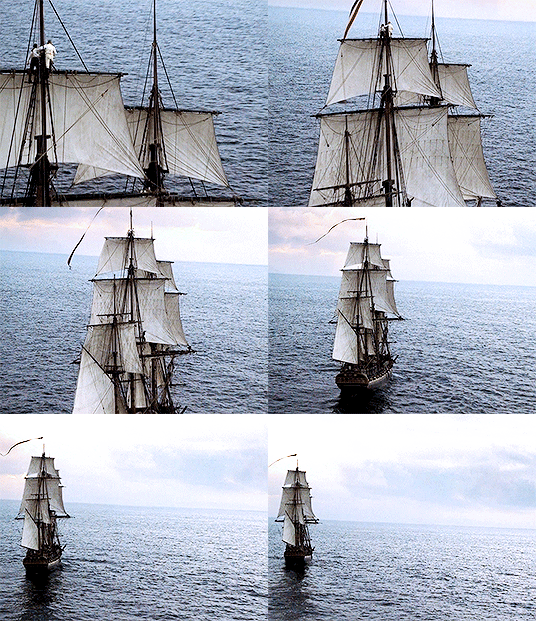
"I am not one who was born in the custody of wisdom. I am one who is fond of olden times and intense in quest of the sacred knowing of the ancients." Gustave Courbet

11 February 2009

John Colter, Mountain Man


Private John Colter, considered one of the finest woodsmen and hunters in all of America in the first decade of the 19th century, was chosen by Meriwether Lewis to be a recon scout for his Clarks Corps Of Discovery. His story is, in itself, one of discovery and tenacity.

During the Corps' return trip home to St. Louis after successfully reaching the Pacific, Colter made a courageously bold decision. Civilization was not for him -- he was staying out west.

From Stephen A. Ambrose's masterpiece, Undaunted Courage . . .

. . . and when the expedition set off downstream, Colter turned back upstream, back to the wilderness, back to the mountains, on his way into the history books as America's first mountain man and the discoverer of the Yellowstone country.

Discovering Lewis & Clark has more on Colter here and here.

09 February 2009

Straight Gas from a true Poet


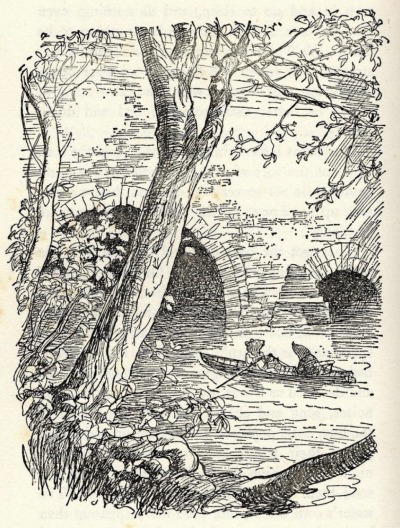
You don't paddle against the current, you paddle with it. And if you get good at it, you throw away the oars. Tell the truth. Sing with passion. Work with laughter. Love with heart. 'Cause that's all that matters in the end.
Kris Kristofferson

Next to Billy Joe Shaver, Kris Kristofferson has got to be one of the most under rated, and certainly under appreciated songwriters ever. Me & Bobby McGee, Sunday Mornin' Comin' Down, Help Me Make It Through The Night, For The Good Times, Why Me Lord . . . need more?

More here.

The Highwaymen, The Last Cowboy Song


This the last cowboy song:
The end of a hundred year waltz.
The voices sound sad as they're singin' along.
Another piece of America's lost.

He rides the feed lots, clerks in the markets,
On weekends sellin' tobacco and beer.
And his dreams of tomorrow, surrounded by fences,
But he'll dream tonight of when fences weren't here.

He blazed the trail with Lewis and Clark,
And eyeball to eyeball, old Wyatt backed down.
He stood shoulder to shoulder with Travis in Texas.
And rode with the 7th when Custer went down.

This the last cowboy song:
The end of a hundred year waltz.
The voices sound sad as they're singin' along.
Another piece of America's lost.

Remington showed us how he looked on canvas,
And Louis Lamour has told us his tale.
Me and Johnny and Waylon and Kris sing about him,
And wish to God we could have ridden his trail.

The old Chisolm trail is covered in concrete now,
They truck it to market in fifty foot rigs.
They roll by his markings and don't even notice,
Like living and dying was all he ever did.

This the last cowboy song:
The end of a hundred year waltz.
The voices sound sad as they're singin' along.
Another piece of America's lost.

This the last cowboy song:
The end of a hundred year waltz.
The voices sound sad as they're singin' along.
Another piece of America's lost.

Time's tale of Lincoln


Very little of The Hammock Paper 's space will be taken up with political crap, but this piece can't be missed.

Statesmanship is not an abstract skill, but a contextual one, highly specific to the circumstances it finds. It is irresistible to wonder what kind of leader Lincoln would have been had there been no secession attempt after his election, or had he lived to be a postwar president. That the question is almost impossible to answer intelligently, though, tells us a great deal. Lincoln was above all a war president. Like it or not, that condition of history defined him. He was not elected to be such a president. He might have been no more effective in peacetime than Andrew Johnson was. And he might well have found out, as Winston Churchill or George H. W. Bush later did, that voters prefer very different kinds of leaders in times of peace and war. We will never know. In any event, such was not to be his destiny.

Read the rest here.

04 February 2009

Mac


Darren McCarty is my all-time favorite Red Wing. He is a consumate team player (ALWAYS follows his teammates going on and coming off the ice), a tough, loyal competitor, with the heart of a lion.

Mac has battled many demons off the ice, a few have threatened to end is career. He has persevered.

HOT DOUG'S: The Sausage Superstore and Encased Meat Emporium


This place was featured this week on Bourdain's tour of Chicago. The Chicago Dog with yellow mustard, radiant-green relish, tomato, pickle spear, and celery salt ($1.75) made me drool. Then it was on to the sweetheart pictured above . . . the Cognac-Infused Pheasant Sausage with Blackberry Mustard, Foie Gras Mousse and Sel Gris ($8).

Just when I thought this noshing Nirvana couldn't get more Nirvana-ish (as Drew would say), the Whopper With Cheese was laid down . . . Fridays and Saturdays, patrons of The Sausage Superstore and Encased Meat Emporium are treated to french fries fried in rendered duck fat ($3.50).

Goodness GRACIOUS!

Hot Doug's site is here.

03 February 2009

. . . and that's one hell of a s#$% storm in anyone's backyard


The Barrett M107 50 caliber sniper rifle - trying to win hearts and minds, but willing to splatter them if necessary.

God bless our Armed Forces.

02 February 2009

I think there might be a football game on


Jalapeno & cheddar bratwurst. Serve with baked beans, doused liberally with Plochman's, and repeat as needed.

I put these babies on around noon, left a spoon on the counter, and with a Budweiser open in the fridge, I was a-snackin' all day long.

The road to sausage


The guys from Nona got together for breakfast at Early Birds. Gloriously prepared pig meat was enjoyed by all. A drive through the country followed. It was a nice day.

Happy Birthday, Frazier . . . dang!

On the way to work


Yes, class was in session.

Straight, High-Octane Gas


Tim O'Brien doin' Look Down That Lonesome Road. How 'bout ol' Jerry Douglass?!!!

It's late on a school night, so on that note . . . "I'll just say so long."

For Buff . . .


Echo & The Bunnymen, Seven Seas . . . "swimming them so well."

01 February 2009

"This didn't happen at Grateful Dead barbeques."


Bourdain and Nugent eat meat and fire weapons.

Though the generations wonder . . .


. . . the lineage remains.

A picture of my sister (top) and daughter, both around age six, almost 40 years apart. As I looked at these pictures, Dan Fogelberg's magnificent song, Forefathers, came to mind . . .

They came from Scandinavia, the land of midnight sun
And crossed the North Atlantic when this century was young
They'd heard that in America every man was free
To live the way he chose to live and be who he could be

Some of them were farmers there and tilled the frozen soil
But all they got was poverty for all their earnest toil
They say one was a sailor who sailed the wide world round
Made home port, got drunk one night, walked off the pier and drowned

My mother was of Scottish blood, it's there that she was born
They brought her to America in 1924
They left behind the highlands and the heather-covered hills
And came to find America with broad expectant dreams and iron wills

My granddad worked the steel mills of central Illinois
His daughter was his jewel, his son was just his boy
For thirty years he worked the mills and stoked the coke-fed fires
And looked toward the day when he'd at last turn 65 and could retire

And the sons become the fathers and their daughters will be wives
As the torch is passed from hand to hand
And we struggle through our lives
Though the generations wander, the lineage survives
And all of us, from dust to dust
We all become forefathers by and by

The woman and the man were wed just after the war
And they settled in this river town and three fine sons she bore
One became a lawyer and one fine pictures drew
And one became this lonely soul
Who sits here now and sings this song to you

And the sons become the fathers and their daughters will be wives
As the torch is passed from hand to hand
And we struggle through our lives
Though the generations wander, the lineage survives
And all of us, from dust to dust
We all become forefathers by and by
By and by


The song is here.

Alexander Volkov, Gothic Woods


I've been there.

Volkov's work can also be see here.

Nathaniel Hawthorne's, Mosses from an Old Manse


The opening sketch in this collection is called, "The Old Manse." It is a guided tour by Hawthorne himself of his newly acquired historical estate in Concord, Massachusetts. The house was originally Ralph Waldo Emerson's childhood home.

The study had three windows, set with little, old-fashioned panes of glass, each with a crack across it. The two on the western side looked, or rather peeped, between the willow-branches, down into the orchard, with glimpses of the river through the trees. The third, facing northward, commanded a broader view of the river, at a spot where its hitherto obscure waters gleam forth into the light of history. It was at this window that the clergyman, who then dwelt in the Manse, stood watching the outbreak of a long and deadly struggle between two nations; he saw the irregular array of his parishioners on the farther side of the river, and the glittering line of the British, on the hither bank. He awaited, in an agony of suspense, the rattle of the musketry. It came--and there needed but a gentle wind to sweep the battle-smoke around this quiet house.

Read the sketch here.

31 January 2009

Hear the sustain? . . . aaahhhhhhhhhhhhhhhhh . . .


Guitar World magazine has rated the Top 50 Guitar Solos. These types of lists always illicit outrage and passionate confirmation of devotees. This list's attraction is the detail in descriptions of the artists' work.

For instance, the professorial explanation of David Gilmour's solo on Dark Side Of The Moon's, "Time" . . .

For most of my solos, I usually use a fuzz box, a delay and a bright eq setting. But to get that kind of singing sustain, you really need to play loud—at or near the feedback threshold.

On the other hand, Ritchie Blackmore's work on "Highway Star," from Rainbow's "triumphal" Machine Head, just can't be made up . . .

We had the Rolling Stones’ mobile recording unit sitting outside in the snow, but to get there we had to run cable through two doors in the corridor into a room, through a bathroom and into another room, from which it went across a bed and out the veranda window, then ran along the balcony for about 100 feet and came back in through another bedroom window. It then went through that room’s bathroom and into another corridor, then all the way down a marble staircase to the foyer reception area of the hotel, out the front door, across the courtyard and up the steps into the back of the mobile unit. I think that setup led to capturing some spontaneity, because once we got to the truck for a playback, even if we didn’t think it was a perfect take, we’d go, ‘Yeah, that’s good enough.’ Because we just couldn’t stand going back again.

But while the vibe may have been loose, Blackmore’s solo on ‘Highway Star’ was well planned. “I wrote that out note for note about a week before we recorded it,” says the guitarist. “And that is one of the only times I have ever done that. I wanted it to sound like someone driving in a fast car, for it to be one of those songs you would listen to while speeding. And I wanted a very definite Bach sound, which is why I wrote it out and why I played those very rigid arpeggios across that very familiar Bach progression—Dm, Gm, Cmaj, Amaj. I believe that I was the first person to do that so obviously on the guitar, and I believe that that’s why it stood out and why people have enjoyed it so much.


Read the rest here.

Thanks, Kev.

30 January 2009

More from The Songlines


Oh I believe in song lines
Obvious and not
I've ridden them like camels
To some most peculiar spots.


Jimmy Buffett, Far Side Of The World

Quotes from Chatwin's moleskines...

Our Nature lies in movement; complete calm is death.
Pascal

To live in one land, is captivitie,
To runne all countries, a wild roguery

Donne

Above all, do not lose your desire to walk; every day I wlk myself into a state of well-being and walked away from every illness; I have walked myself into my best thoughts, and I know of no thought so burdensome that one cannot walk away fromit . . . but by sitting stillk, and the more one sits still, the closer one comes to feeling ill . . . Thus if one just keeps walking, everything will be all right.
Kierkegaard

Solvitur ambulando. "It is solved by walking."

29 January 2009

Snow Plow Train

From Goodland, Kansas, January 2, 2007...


That is so neat! I love winter!!!

Vivaldi, The Four Seasons: Winter

Concerto No. 4 in F minor, RV.297, performed by Nigel Kennedy.

1st movement, allegro non molto


2nd movement, largo


3rd movement, allegro

Bruce Chatwin, The Songlines


On this, my second snow-day in a row, I have spent the greater part of the day drinking tea, listening to Mozart and Django, and reading Bruce Chatwin's, The Songlines.

What a great read. The book is Chatwin's account of his travels into the Australian Outback (not the meat shack) to learn the meaning of the Aboriginal's ancient "Dreaming-tracks."

dreamtime.net.au describes them ...
Dreaming-tracks trace the creative journey of the Spirit Ancestors as they formed the land and laid down the Law. Dreaming tracks are sometimes called songlines. They record the travels of the Spirit Ancestors who "sung up" the country into life. It is believed that performing the right songs and ceremonies at points along the Dreaming track gives people direct access to the Dreaming. The Dreaming tells of the journey of Ancestral Beings who created the natural world. The Dreaming is infinite and links the past with the present to determine the future. It is the natural world, especially the land or county to which a person belongs, which provides the link between the people and The Dreaming.

I am fascinated by tales of trekkers. I am very fortunate to have a few friends who have traveled extensively and they patiently indulge me with their stories. In The Songlines, at the end of chapter 30, Chatwin contemplates man's desire to roam...

Read the excerpt from The Songlines here.

Subsequent pages in chapter 30 contain quotes Chatwin collected within the pages of his vrai moleskine. I will post these in future entries of HP.

28 January 2009

Happy Birthday, Jackson Pollock


On the floor I am more at ease, I feel nearer, more a part of the painting, since this way I can walk around in it, work from the four sides and be literally `in' the painting. When I am in my painting, I'm not aware of what I'm doing. It's only after a sort of "get acquainted" period that I see what I have been about. I have no fears about making changes, destroying the image, etc., because the painting has a life of its own.
Possibilities I, Winter 1947-48

One of my History of Art professors, Dr. Herban, told me that the responsibility given to the viewer of modern art is not to judge whether or not a work is valid -- good or bad. Rather, it is his job to understand the artist's purpose. Looking at his work and considering the quote above, we are seeing the expression of a soul.

I get a kick out of people who see Pollock's work and say, "That's not art! Heck, I could do that!" Well, first of all, shame on you for diminishing your own creative worth. Secondly . . . ah HA! Youdidn't do it! Furthermore, and sadly, you've never attempted such an expression, have you? Now, enough loitering! Go create!

National Gallery of Art's Pollock site is here.

Usable intellect


Tavis Smiley has said that Dr. Cornel West once told him that one cannot lead folk if one does not love folk; that to save folk one must serve folk.

Dr. West's intellect is, as Smiley puts it, usable intellect. This man's wisdom goes far beyond race. He speaks to us as humans and reminds us of the profound simplicity of God's charge. The problem is that in these days of the fetish of success, is anyone listening?

In Defense of Penmanship


For many pro-keyboarding anti-handwriters, the real bugaboo is cursive writing--the Palmer Method and its offspring. When the computer crashes or the electricity fails, when repetitive stress syndrome threatens or they’re on a mountaintop in Colorado with the urge to write a poem and only a notebook at hand--what, they ask, is wrong with printing?

The only sensible answer is: nothing. An even more sensible answer is that it’s possible to learn a writing system that combines the clarity and simplicity of printing with the speed of cursive. Many of us have, informally, devised such a script for ourselves out of desperation.


Although I haven't written in cursive since junior high, I LOVE to print. Colleagues often compliment the marks I make, and there isn't a one that goes by that I don't chuckle and remember my institutional training in what Dr. Wallschlaeger called "Lettering." As a sophomore design student, each night we were charged with the task of completing the alphabet and numbers, for a height of 3/16" to 1 1/2". All the letter forms were to be of the same "personality," as Doc called it -- all letters made with the same stroke weight, design, and style. I loved it. I felt as though I were a scribe during the renaissance, cloistered away to practice my craft. After ten weeks of this, or when The Doctor deemed you worthy, it was thought that your technique was ingrained.

I have been told numerous times that I should make my lettering a font. Never. It just doesn't seem like the thing a scribe would allow.

Read the rest here.

Explore Barchowsky Fluent Handwriting here.

25 January 2009

Jimmy Buffett, Trip Around the Sun

Happy Birthday, Carrie!


Hear 'em singing Happy Birthday
Better think about the wish I made
This year gone by ain't been a piece of cake
Every day's a revolution
Pull it together and it comes undone
Just one more candle and a trip around the sun

Chorus:
I'm just hanging on while this old world keeps spinning
And it's good to know it's out of my control
If there's one thing that I've learned from all this living
Is that it wouldn't change a thing if I let go

No, you never see it coming
Always wind up wondering where it went
Only time will tell if it was time well spent
It's another revelation
Celebrating what I should have done
With these souvenirs of my trip around the sun

(Chorus)

Yes, I'll make a resolution
That I'll never make another one
Just enjoy this ride on my trip around the sun
Just enjoy this ride ...
Until it's done

22 January 2009

Ephemera

The completion of my chef "Holy Trinity"

The Devil In The Kitchen


One of my food heroes is Marco Pierre White. He was the first and youngest Brit to ever be granted three Michelin stars. In 1999, at the height of his notoriety, he returned the Michelin stars, told the world food establishment to take a running jump, and vanished.
He made the decision as he makes many major decisions, clasping a fishing rod. "I caught a salmon and let it go. I realized I was being judged by people who knew less than me, and that gave me the confidence to think, 'I should be kind to myself and do what I want to do.' And so the next day I found myself unemployed. It was important for me to understand myself. Only then can you find happiness.

His book, The Devil In The Kitchen: Sex, pain, madness, and the making of a great chef, is his account of the whole thing. Find it here.

Navigate wisely . . . don't get lost


He who wanders with purpose, has no purpose to wander.

Artistry on grass


1981 Wimbledon. McEnroe vs. Borg. This is the match that ignited my love of tennis. McEnroe, for my money, is the most talented player to ever play the game -- a wizard with a racket.

Mind you, this is before the advent of the graphite trampolines that made the careers of Agassi, Sampras, and the like. McEnroe played with finesse, smarts, strategy, and a wooden racket.

Being able to go "out there" and pull up a clip of this moment is what technology should be all about. It is amazing to see this match again. Pure genius on the part of Mac.

And he did it without dropping the ol' "Whopper With Cheese" on anyone!

Drowned rat . . . ?


Nope. Just Cooper getting a bath. Molson calls the bottom one, "Cher posing for the camera."

Buds


The drive to work this week


The Artist Speaks


On authority ...

21 January 2009

Why Hemingway should've taught fifth grade writing


Ernesto espoused writing "one true sentence." He railed against those he called frauds because they wrote on subjects of which they had no genuine knowledge. Hem's lifelong aim was to write simply about complex ideas.

Many of the same issues that Hemingway struggled with throughout his career are now being wrestled with by the fifth graders that I teach each day. Many a planning period has found me referring to Papa's simple rules for inspiration so that I may more simply teach them. The kids already know about his "Garbage Draft Rule" -- When writing a first draft, understand that it will always be garbage. Don't worry about getting it right, just get it down.

A distillation of Hemingstein's writing guidelines is available here.

18 January 2009

The Curmudgeonly Sage


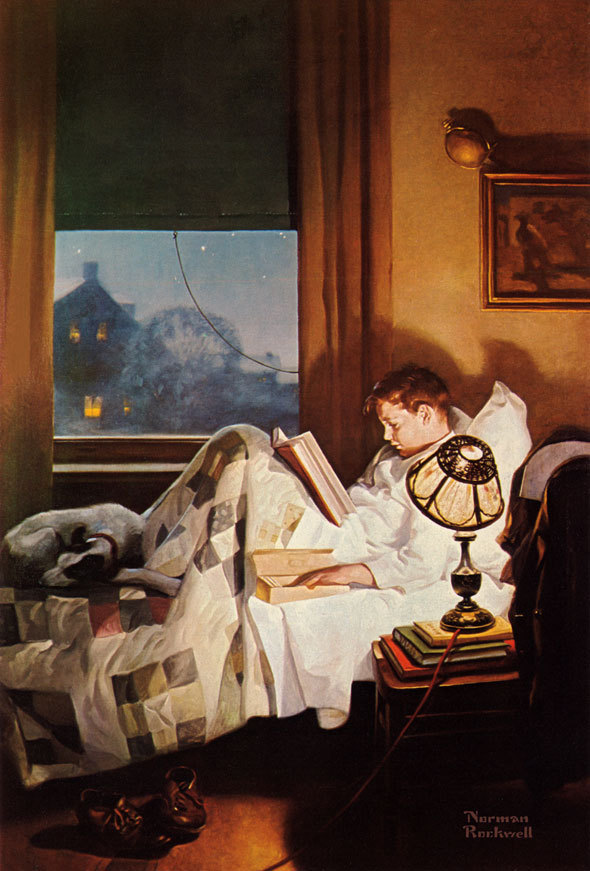
A few years ago, I was flipping through the channels and came across an interview with Harold Bloom on C-SPAN's "Booknotes." He was discussing his most recent book at the time, How to Read and Why. Bloom is a literary critic and Yale professor who rails against the technological world and its repercussions on reading and reading culture. One of the most enjoyable aspects of the C-SPAN interview was Bloom describing his reading regimine . . . his chair, blanket, tea, whole afternoons given over to reading. He also expressed great dispair over the fact that life would never last long enough for him to read all he wanted to read. This desire was fueled by an imagination that was constructed over a lifetime of reading. He loathes the current technological "advancements" that find children glued to PlayStations and television screens, any hope of the inspiration that fuels imagination stripped by ever-expanding envelopes of degradation.

Kerry Fried, from amazon.com, has a review of the book that describes Bloom and his devoted passion for books and reading impeccably. Read his review and get a copy of this important and useful book here.

Leonardo and music


In his Treatise on Painting, Leonardo writes: “But painting, the servant of the eye, that noblest of the senses, reveals a harmonious proportion similar to the harmonious proportion which results from many voices uniting and singing together, in such a delightful manner that the audience is rapt in intense admiration.” He later goes on to remark: “Do you not know that our soul is composed of harmony, and that harmony cannot be bred save in the simultaneity and the relative proportions of objects which are seen or heard?”

Read the rest here.

This afternoon's hike


On the way home from lunch, I stopped at the Denison University Biological Reserve to walk off the feast. Snow falling, quiet, peaceful.

The Bio Reserve's website with trail map can be found here.

Shorty's sweetie