An excellent book ...
Three broadly defined elements of the learning experience support internal motivation and the persistence it enables. Internal motivation relies on learners having autonomy in their learning, a progressing sense of competence in their skills and knowledge, and the ability to learn in a concrete or “real world” context rather than in the abstract. These are mostly absent from classroom learning. Autonomy is rare, useful context is absent, and school’s means for affirming competence often feel so arbitrary as to be almost without use — and are sometimes actively demotivating. Autonomy means that you follow your own path. You learn what you want to learn, when and how you want to learn it, for your own reasons. Your impetus to learn comes from within because you control the conditions of your learning rather than working within a structure that’s pre-made and inflexible.
The second thing you need to stick with learning independently is to set your own goals toward an increasing sense of competence. You need to create a feedback loop that confirms your work is worth it and keeps you moving forward. In school this is provided by advancing through the steps of the linear path within an individual class or a set curriculum, as well as from feedback from grades and praise.
The third thing that can make or break your ability to sustain internal motivation is to situate what you’re learning in a context that matters to you. In some cases, the context is a specific project you want to accomplish, which … also functions to support your sense of progress.
School is not designed to offer these three conditions; autonomy and context are sorely lacking in classrooms. School can provide a sense of increasing mastery, via grades and moving from introductory classes to harder ones. But a sense of true competence is harder to come by in a school environment.
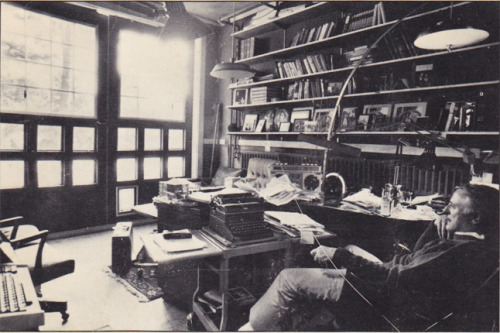
Howard Rheingold interviews the author ...
Teacher payroll is the greatest expense in public education. For that reason traditional classrooms will be obsolete by 2030. The current remote learning culture is providing the perfect Petri dish for this experiment to become reality, probably sooner.