"I am not one who was born in the custody of wisdom. I am one who is fond of olden times and intense in quest of the sacred knowing of the ancients." Gustave Courbet
Showing posts with label National Review. Show all posts

07 August 2025

Excellence.


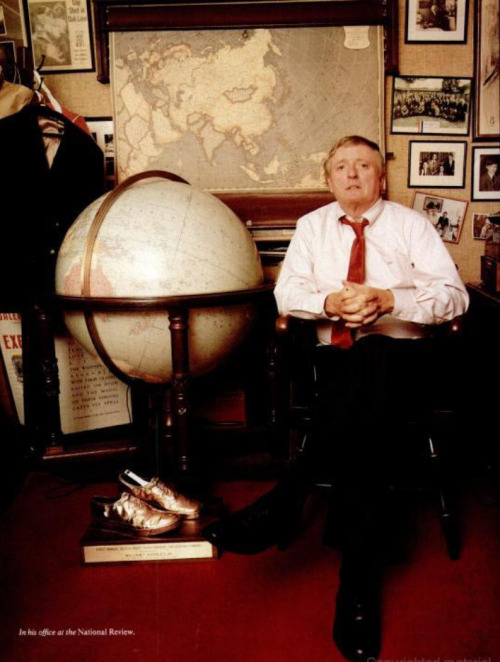
The largest cultural menace in America is the conformity of the intellectual cliques which, in education as well as the arts, are out to impose upon the nation their modish fads and fallacies, and have nearly succeeded in doing so. In this cultural issue, we are, without reservations, on the side of excellence (rather than “newness”) and of honest intellectual combat (rather than conformity).

William F. Buckley Jr., from "Our Mission Statement," National Review, November 19, 1955

Beware the echo-chamber, blog-o-sphere.

26 March 2025

Noble.


William F. Buckley Jr.'s ode to peanut butter ...
For many years I have labored under the burden of an unrequited passion. What have I done for it, in return for all it has done for me? Nothing. But I have wondered what I could use as what the journalists call a “peg.”

I have found one. This may strike some of the literal-minded as attenuated, but it goes as follows: This is the centennial year of the Tuskegee Institute, which was founded on the Fourth of July, 1881, by Booker T. Washington. Tuskegee continues to be a remarkable institution, and former Secretary of Defense Donald Rumsfeld is the head of a committee of illustrious men and women who are devoting themselves to raising $20 million to encourage it in its noble work.

What noble work? We have arrived at step two. It was, among other things, the principal academic home of George Washington Carver, and it was G. W. Carver who to all intents and purposes invented the peanut. What he did, more specifically, was document that the cultivation of the peanut despoiled the land far less than the cultivation of cotton, and then he set out to merchandise the peanut in order that there might be a market for it.

He discovered an estimated three hundred uses for it, many of them entirely removed from the peanut’s food value. But it is this, of course, that is the wonder of the peanut. The Encyclopedia Britannica informs us that “pound for pound peanuts have more protein, minerals, and vitamins than beef liver, more fat than heavy cream, and more food energy (calories) than sugar.” And George Washington Carver discovered — peanut butter.

I have never composed poetry, but if I did, my very first couplet would be:

I know that I shall never see

A poem lovely as Skippy’s peanut butter.

When I was first married and made plain to my wife that I expected peanut butter for breakfast every day of my life, including Ash Wednesday, she thought me quite mad (for the wrong reasons). She has not come round, really, and this is a source of great sadness to me because one wants to share one’s pleasures.

I was hardened very young to the skeptics. When I was twelve I was packed off to a British boarding school by my father, who dispatched every fortnight a survival package comprising a case of grapefruit and a large jar of peanut butter. I offered to share my tuck with the other boys at my table. They grabbed instinctively for the grapefruit–but one after another actually spit out the peanut butter, which they had never before seen and which only that very year (1938) had become available for sale in London. No wonder they needed American help to win the war.

You can find it now in specialty shops in Europe, but I have yet to see it in anyone’s home. And it is outrageously difficult to get even in the typical American hotel. My profession requires me to spend forty or fifty nights on the road every year, and when it comes time to order breakfast over the telephone I summon my resolution–it helps to think about peanut butter when you need moral strength–and add, after the orange juice, coffee, skim milk, and whole-wheat toast, “Do you have any peanut butter?”

Sometimes the room service operator will actually break out laughing when the request is put in, at which point my voice becomes stern and unsmiling. Often the operator will say, “Just a minute,” and then she will turn, I suppose to the chef, but I can hear right through the hand she has put over the receiver–”Hey Jack. We got any peanut butter? Room 322 wants some peanut butter!” This furtive philistinism is then regularly followed by giggles all around. One lady recently asked, “How old is your little boy and does he want a peanut butter sandwich? To which I replied, “My little boy is twenty-eight and is never without peanut butter, because he phones ahead before he confirms hotel reservations.”

I introduced Auberon Waugh to cashew butter ten years ago when he first visited America, and although I think it inferior to peanut butter Auberon was quite simply overwhelmed. You can’t find it in Great Britain so I sent him a case from the Farmer’s Market. It quite changed his writing style: for about ten months he was at peace with the world. I think that was the time he said something pleasant about Harold Wilson. In the eleventh month, it was easy to tell that he had run out. It quite changes your disposition and your view of the world if you cannot have peanut butter every day.

So here is yet another reason for contributing money to the Tuskegee Institute. For all we know, but for it we’d never have tasted peanut butter. There’d be no Planter’s, no Jif, no Peter Pan–that terrible thought reminds us of our indebtedness to George Washington Carver.

William F. Buckley Jr.’s From Buckley's column, “On the Right," National Review, March 26, 1981
12 January 2025

Excellence.


The largest cultural menace in America is the conformity of the intellectual cliques which, in education as well as the arts, are out to impose upon the nation their modish fads and fallacies, and have nearly succeeded in doing so. In this cultural issue, we are, without reservations, on the side of excellence (rather than "newness") and of honest intellectual combat (rather than conformity).

William F. Buckley Jr., from the National Review mission statement

13 August 2020

Now.


National Review on the thin veneer of American civilization ...
A mindless mob, appeased and enabled by a terrified establishment, has systematically and with impunity been destroying as many of the referents of American history as it can. The fools of the bipartisan elite at first believed the iconoclasm was selective, rational, and measured. It was not. The point was never to fixate on the sins of the ancient slaveholder, or the European discoverer of America, or the author of Don Quixote.
Nor was the point to topple the bad in order to commission the better to take its place. (After all, for these statue-topplers, what icon might be substituted, given the array of their progressive heroes such as Wilsonian racists, mass-murdering Maoists, thugs masquerading as revolutionaries such as Che, or liberal icons like the eugenicist Margaret Sanger, or even the interment-signer FDR?)
The point instead was to destroy and deface most all images of America, from Frederick Douglass and Ulysses S. Grant to Lincoln and World War II heroes such as Churchill. The strategy of the Left was that if they could easily wage war on the bronze and stone of the past without repercussions, then as fear and terror mounted, they could turn to the flesh-and-blood enemies of the people in the present. Anyone who with impunity burns books — including the Bible — vandalizes memorials, defaces public buildings, or topples statues at night eventually gets around to trying out such violence on real people of the present. Portland is a good example, as the spoiled of the middle class seek each night to ignite a police station to roast the officers barricaded inside. Another is Chicago, where looters target high-end boutiques mouthing slogans of social justice. 
Once upon a time, trying to torch a federal courthouse would earn years in prison. And simply taking over a large chunk of a downtown to re-create Lord of the Flies was unthinkable. Not now. Today you can go to jail for reopening a gym that requires masks, social distancing, and constant cleansing with antiseptics. But you will not go to jail if you assemble en masse to riot, unmasked, armored with makeshift padding, umbrellas, and helmets, and you’re free to shout and spray in the faces of officers and fellow looters and rioters alike.

CONNECT

09 July 2020

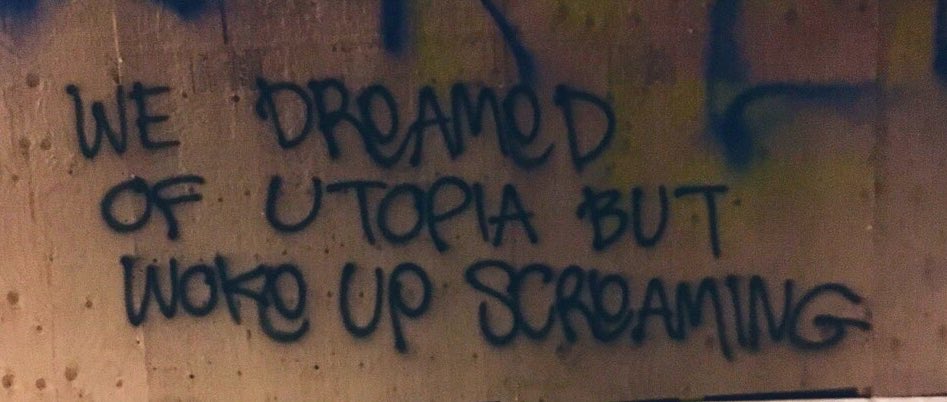
Scream.


National Review on "the woke but godless, the arrogant but ignorant, the violent but physically unimpressive, the degreed but poorly educated, the broke but acquisitive, the ambitious but stalled" ...

On one hand, those toppling statues or canceling their own careers on the Internet pose as vicious Maoists — the hard-core shock troops of the revolution. Their brand is vile profanity, taunts to police, firebombs, and spray paint.

In homage to Italy’s Blackshirts of the past, they wear black hoodies, don makeshift helmets, and strap on ad hoc protective padding — part lacrosse attire, part cinematic Road Warrior costume.

The televised stereotype of the Antifa activist is a physically unimpressive but violent-talking revolutionary. He seems to strut in laid-back, blue-city Minneapolis but wisely avoids the suburbs and small towns of the nation’s red states. He spits at police when standing beside fellow agitators but would never do that when alone confronting an autoworker or welder.

When police march against the Antifa crowd and their appendages in order to clear the streets, they often scream like preteens, objecting to mean officers who dare to cross them.

CONNECT

05 July 2020

Fortitude.


National Review calls for "Lincolnian and Churchillian fortitude" ...

The voices of sanity are few, and civic courage is in short supply. The exemplars of such courage in the Anglo-American tradition — Washington, Lincoln, U.S. Grant, Teddy Roosevelt, and Winston Churchill — are under assault from angry extremists who topple statues with impunity and demand absolute conformity. Government at every level appears impotent as indignant fanatics rule the streets ...

To affirm the moral law, the natural law, the spirit of the Ten Commandments, the true ground of all human dignity, is now said to be an indelible mark of racism. The mob dictates, and subservient elites shamelessly comply. We are witnessing nothing less than a Cultural Revolution marked by voluntary servitude or self-enslavement. American democracy risks committing suicide ...

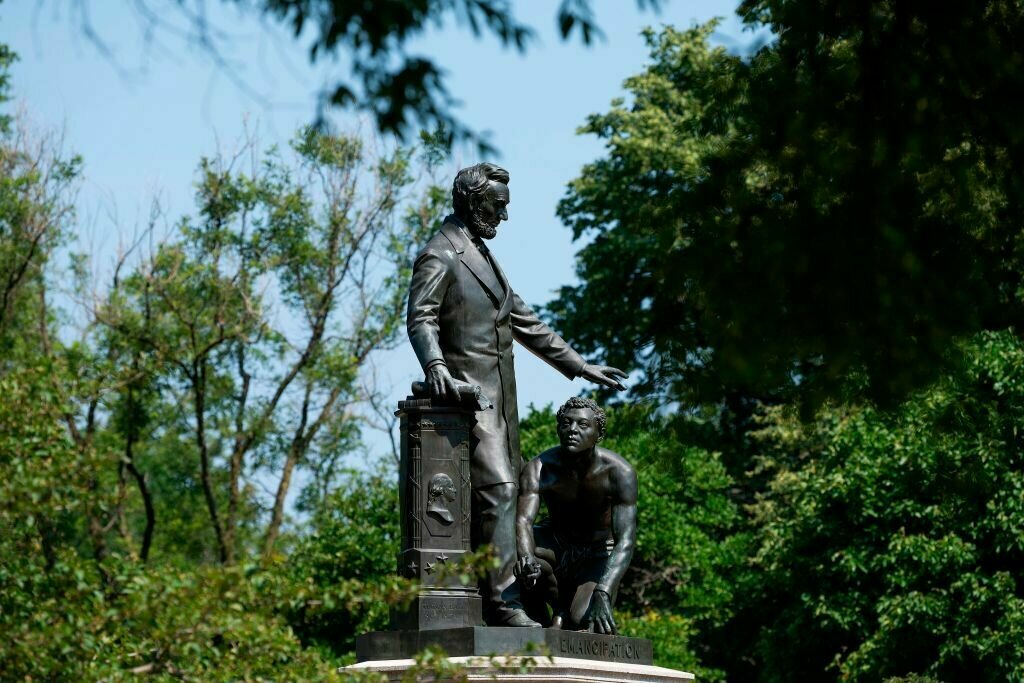
But now even the Freedmen’s Monument is threatened by a mob of angry thugs. These “Bourgeois Bolsheviks,” as The American Conservative recently described them, despise the mutual accountability and respect for law that undergirds true liberty and equality. They mock the greatness of Lincoln and Douglass. They are defined by ignorance, ingratitude, and envy. Their ignoble “passion for equality,” as Tocqueville called it, is a grotesque perversion of the noble moral and civic equality that underlies the American proposition. This desire to tear down, to destroy and repudiate the patrimony of our fathers, is incompatible with civilized existence.

CONNECT

27 February 2020

Combat.


It is the job of centralized government (in peacetime) to protect its citizens’ lives, liberty and property. All other activities of government tend to diminish freedom and hamper progress. The growth of government(the dominant social feature of this century) must be fought relentlessly. In this great social conflict of the era, we are, without reservations, on the libertarian side.

The profound crisis of our era is, in essence, the conflict between the Social Engineers, who seek to adjust mankind to conform with scientific utopias, and the disciples of Truth, who defend the organic moral order. We believe that truth is neither arrived at nor illuminated by monitoring election results, binding though these are for other purposes, but by other means, including a study of human experience. On this point we are, without reservations, on the conservative side.

The century’s most blatant force of satanic utopianism is communism. We consider “coexistence” with communism neither desirable nor possible, nor honorable; we find ourselves irrevocably at war with communism and shall oppose any substitute for victory.

The largest cultural menace in America is the conformity of the intellectual cliques which, in education as well as the arts, are out to impose upon the nation their modish fads and fallacies, and have nearly succeeded in doing so. In this cultural issue, we are, without reservations, on the side of excellence (rather than “newness”) and of honest intellectual combat (rather than conformity).

The most alarming single danger to the American political system lies in the fact that an identifiable team of Fabian operators is bent on controlling both our major political parties (under the sanction of such fatuous and unreasoned slogans as “national unity,” “middle-of-the-road,” “progressivism,” and “bipartisanship.”) Clever intriguers are reshaping both parties in the image of Babbitt, gone Social-Democrat. When and where this political issue arises, we are, without reservations, on the side of the traditional two-party system that fights its feuds in public and honestly; and we shall advocate the restoration of the two-party system at all costs.

The competitive price system is indispensable to liberty and material progress. It is threatened not only by the growth of Big Brother government, but by the pressure of monopolies(including union monopolies. What is more, some labor unions have clearly identified themselves with doctrinaire socialist objectives. The characteristic problems of harassed business have gone unreported for years, with the result that the public has been taught to assume (almost instinctively) that conflicts between labor and management are generally traceable to greed and intransigence on the part of management. Sometimes they are; often they are not. National Review will explore and oppose the inroads upon the market economy caused by monopolies in general, and politically oriented unionism in particular; and it will tell the violated businessman’s side of the story.

No superstition has more effectively bewitched America’s Liberal elite than the fashionable concepts of world government, the United Nations, internationalism, international atomic pools, etc. Perhaps the most important and readily demonstrable lesson of history is that freedom goes hand in hand with a state of political decentralization, that remote government is irresponsible government. It would make greater sense to grant independence to each of our 50 states than to surrender U.S. sovereignty to a world organization.

William F. Buckley Jr., from National Review's credenda

24 April 2019

Inheritance.


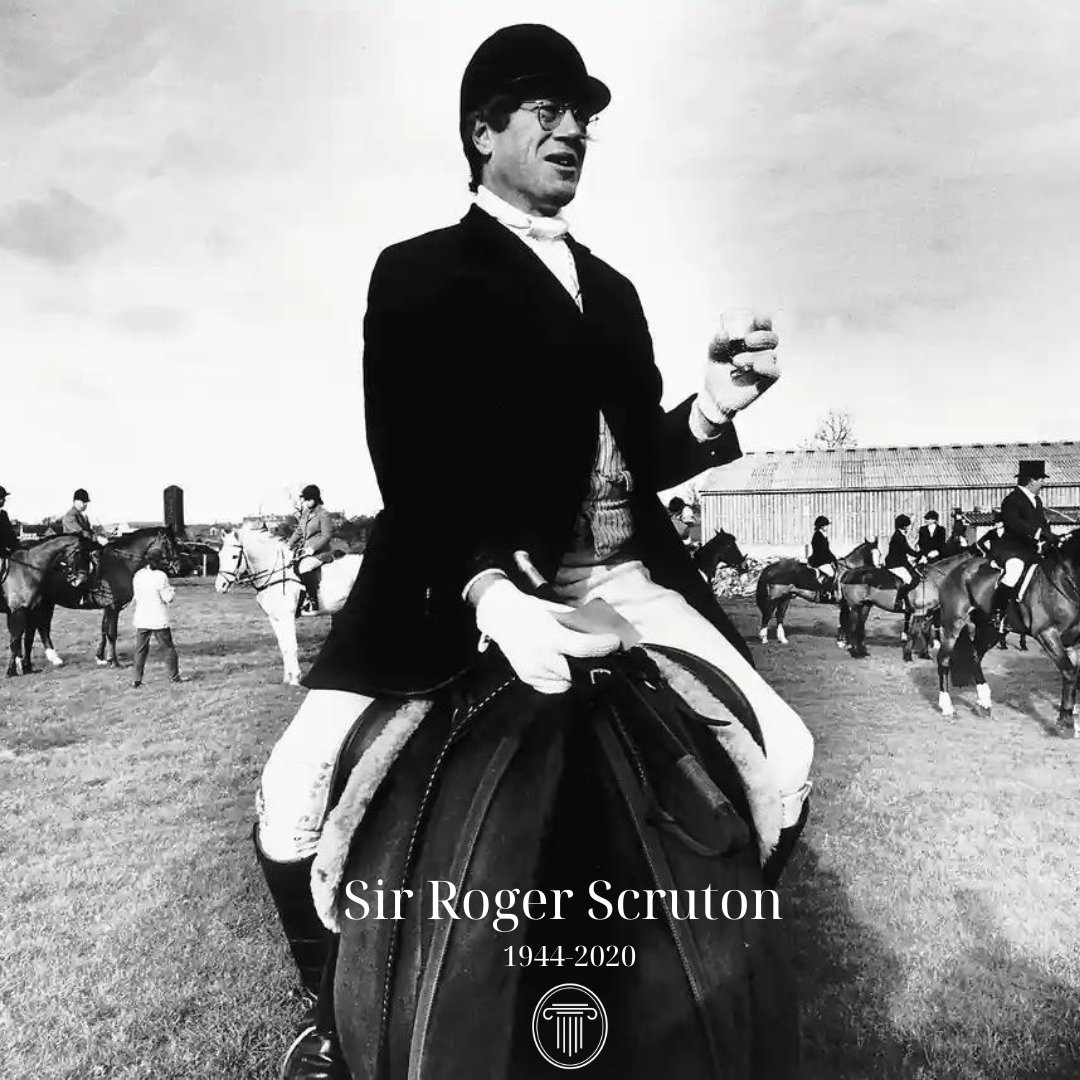
Sir Roger Scruton's thoughts on Notre-Dame ...

We have a national cathedral – Westminster Abbey – where our poets and monarchs are buried. But it is not national as Notre Dame is national. Our heroes are stacked away there, revered for things that are vaguely remembered. In the mysterious interior of Notre-Dame, however, something is celebrated that is far more durable than the deeds of heroes: what is revered is an idea. The Englishman, looking up at those gargoyles from the square below, is made aware of the God-given idea that can reveal itself, now in a King, now in an artist or playwright, now in the peasant girl whom we, the English, martyred in our greatest crime.

We are awe-struck by the presence of this idea, fixed forever in stone, because it is not unique to the cathedral but is embodied in the city all around. We in Britain have destroyed our cities, shovelling away the stone and replacing it with steel and glass. We have done to London what Le Corbusier wished to do to Paris, and what one of our architects, invited by President Pompidou, did to the Marais. We have replaced built form by childish bubbles of steel and glass. Our churches stand in concrete deserts, and it is hardly surprising if nobody visits them or enters them for a time of prayer.

As the angel on the roof has promised, Notre Dame will be resurrected. It will be resurrected because its city, unique among modern capitals, has remained continually itself, from the time when it was the spiritual heart of Europe, through the time when it turned the world upside down, to our present time, when it reminds our troubled continent of the spiritual inheritance that it must not deny.

CONNECT

Kurt offers thoughts on Notre-Dame and expressions of transcendence.