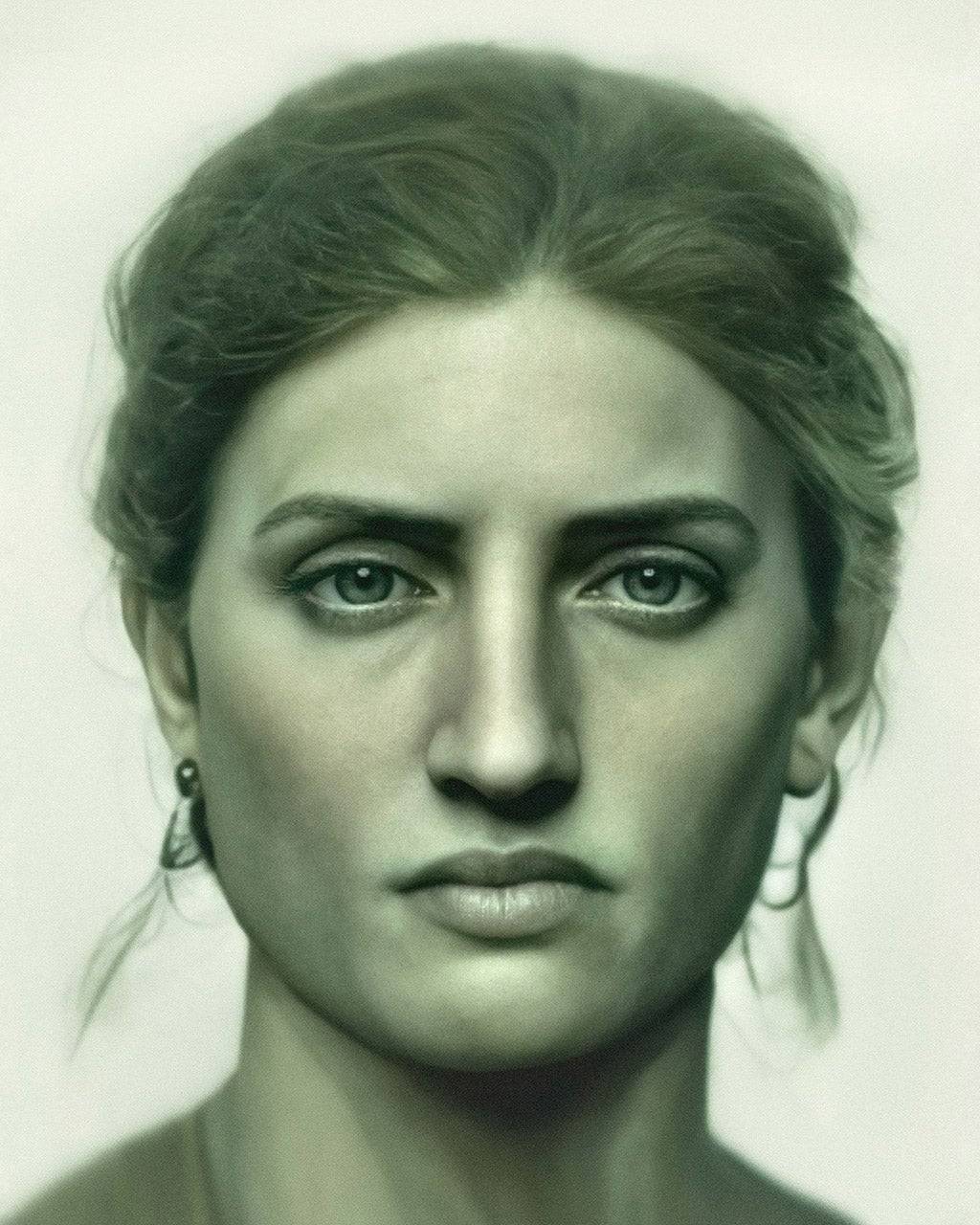
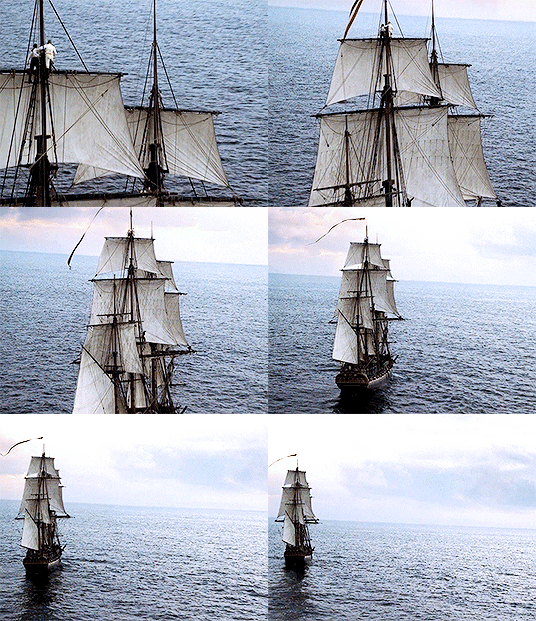
"I am not one who was born in the custody of wisdom. I am one who is fond of olden times and intense in quest of the sacred knowing of the ancients." Gustave Courbet
Showing posts with label Jeffers. Show all posts

28 May 2023

Friends.

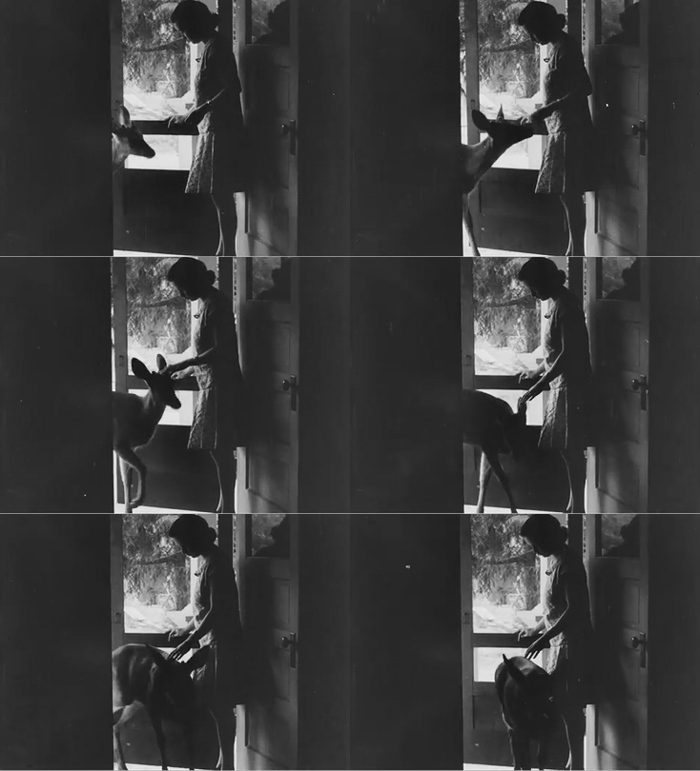
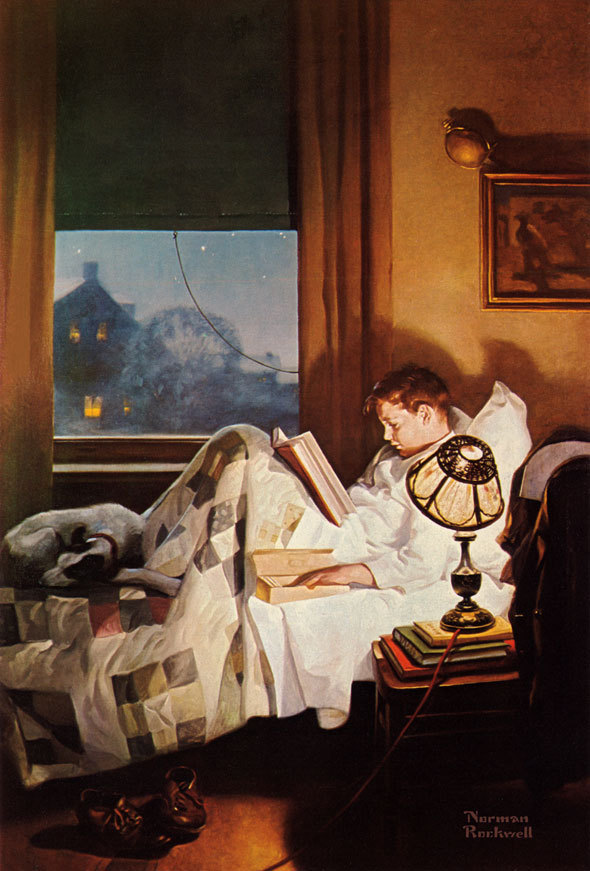
Firchau, Molson, 2008


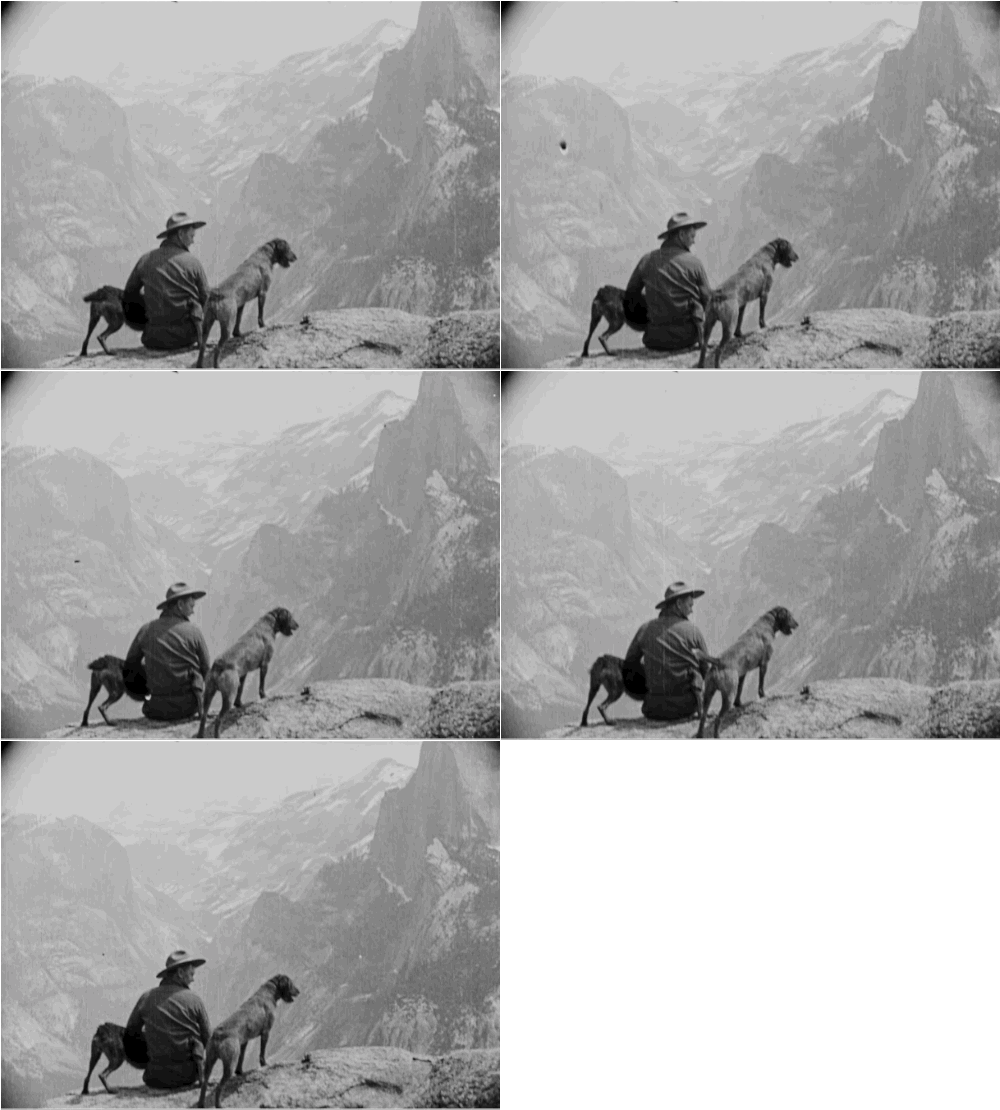
The HOUSE DOG’S GRAVE

I’ve changed my ways a little; I cannot now
Run with you in the evenings along the shore,
Except in a kind of dream; and you, if you dream a moment,
You see me there.

So leave awhile the paw-marks on the front door
Where I used to scratch to go out or in,
And you’d soon open; leave on the kitchen floor
The marks of my drinking pan.

I cannot lie by your fire as I used to do
On the warm stone,
Nor at the foot of your bed; no, all the night through
I lie alone.

But your kind thought has laid me less than six feet
Outside your window where firelight so often plays,
And where you sit to read–and I fear often grieving for me–
Every night your lamplight lies on my place.

You, man and woman, live so long, it is hard
To think of you ever dying
A little dog would get tired, living so long.
I hope than when you are lying

Under the ground like me your lives will appear
As good and joyful as mine.
No, dear, that’s too much hope: you are not so well cared for
As I have been.

And never have known the passionate undivided
Fidelities that I knew.
Your minds are perhaps too active, too many-sided. . . .
But to me you were true.

You were never masters, but friends. I was your friend.
I loved you well, and was loved. Deep love endures
To the end and far past the end. If this is my end,

I am not lonely. I am not afraid. I am still yours.

Robinson Jeffers

13 January 2021

Reasons.

Wyeth, Lawn Chair, 1962


Beauty, is the sole business of poetry. 
The rest’s diversion: those holy or noble sentiments, the intricate ideas, 
The love, lust, longing: reasons, but not the reason.

Robinson Jeffers

20 December 2020

Beauty.


I think that one may contribute (ever so slightly) to the beauty of things by making one’s own life and environment beautiful, so far as one’s power reaches. This includes moral beauty, one of the qualities of humanity, though it seems not to appear elsewhere in the universe. 

But I would have each person realize that his contribution is not important, its success not really a matter for exultation nor its failure for mourning; the beauty of things is sufficient without him.

Robinson Jeffers

15 November 2019

Sanctuary.

Chatham, Autumn Moon Rise, 1988


The DEER LAY DOWN THEIR BONES

I followed the narrow cliffside trail half way up the mountain
Above the deep river-canyon. There was a little cataract crossed the path, flinging itself
Over tree roots and rocks, shaking the jeweled fern-fronds, bright bubbling water
Pure from the mountain, but a bad smell came up. Wondering at it I clambered down the steep stream
Some forty feet, and found in the midst of bush-oak and laurel,
Hung like a bird’s nest on the precipice brink a small hidden clearing,
Grass and a shallow pool. But all about there were bones Iying in the grass, clean bones and stinking bones,
Antlers and bones: I understood that the place was a refuge for wounded deer; there are so many
Hurt ones escape the hunters and limp away to lie hidden; here they have water for the awful thirst
And peace to die in; dense green laurel and grim cliff

Make sanctuary, and a sweet wind blows upward from the deep gorge.—I wish my bones were with theirs.
But that’s a foolish thing to confess, and a little cowardly. We know that life
Is on the whole quite equally good and bad, mostly gray neutral, and can be endured
To the dim end, no matter what magic of grass, water and precipice, and pain of wounds,
Makes death look dear. We have been given life and have used it—not a great gift perhaps—but in honesty
Should use it all. Mine’s empty since my love died—Empty? The flame-haired grandchild with great blue eyes
That look like hers?—What can I do for the child? I gaze at her and wonder what sort of man
In the fall of the world…I am growing old, that is the trouble. My children and little grandchildren
Will find their way, and why should I wait ten years yet, having lived sixty-seven, ten years more or less,
Before I crawl out on a ledge of rock and die snapping, like a wolf
Who has lost his mate?—I am bound by my own thirty-year-old decision: who drinks the wine
Should take the dregs; even in the bitter lees and sediment
New discovery may lie. The deer in that beautiful place lay down their bones: I must wear mine.

Robinson Jeffers

22 October 2019

Listen.

Michelangelo, Ignudo, 1509


NATURAL MUSIC
The old voice of the ocean, the bird-chatter of little rivers,
(Winter has given them gold for silver
To stain their water and bladed green for brown to line their banks)
From different throats intone one language.
So I believe if we were strong enough to listen without
Divisions of desire and terror
To the storm of the sick nations, the rage of the hunger smitten cities,
Those voices also would be found
Clean as a child's; or like some girl's breathing who dances alone
By the ocean-shore, dreaming of lovers.

Robinson Jeffers

14 September 2019

Behold.


WONDER and JOY

The things that one grows tired of--O, be sure
They are only foolish artificial things!
Can a bird ever tire of having wings?
And I, so long as life and sense endure,
(Or brief be they!) shall nevermore inure
My heart to the recurrence of the springs,
Of the gray dawns, the gracious evenings,
The infinite wheeling stars. A wonder pure
Must ever well within me to behold
Venus decline; or great Orion, whose belt
Is studded with three nails of burning gold,
Ascend the winter heaven. Who never felt
This wondering joy may yet be good or great:
But envy him not: he is not fortunate.

Robinson Jeffers

12 March 2016

Greatly.

Dionne, End of the Day, 2016


To feel and speak the astonishing beauty of things—earth, stone and water,
Beast, man and woman, sun, moon and stars—
The blood-shot beauty of human nature, its thoughts, frenzies and passions,
And unhuman nature its towering reality—
For man’s half dream; man, you might say, is nature dreaming, but rock
And water and sky are constant—to feel
Greatly, and understand greatly, and express greatly, the natural
Beauty, is the sole business of poetry.
The rest’s diversion: those holy or noble sentiments, the intricate ideas,
The love, lust, longing: reasons, but not the reason.

Robinson Jeffers