"I am not one who was born in the custody of wisdom. I am one who is fond of olden times and intense in quest of the sacred knowing of the ancients." Gustave Courbet
Showing posts with label theory. Show all posts

17 July 2023

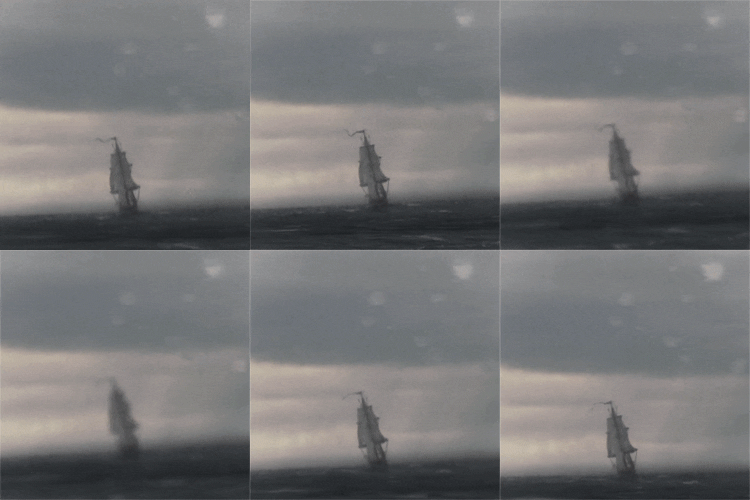
Through.

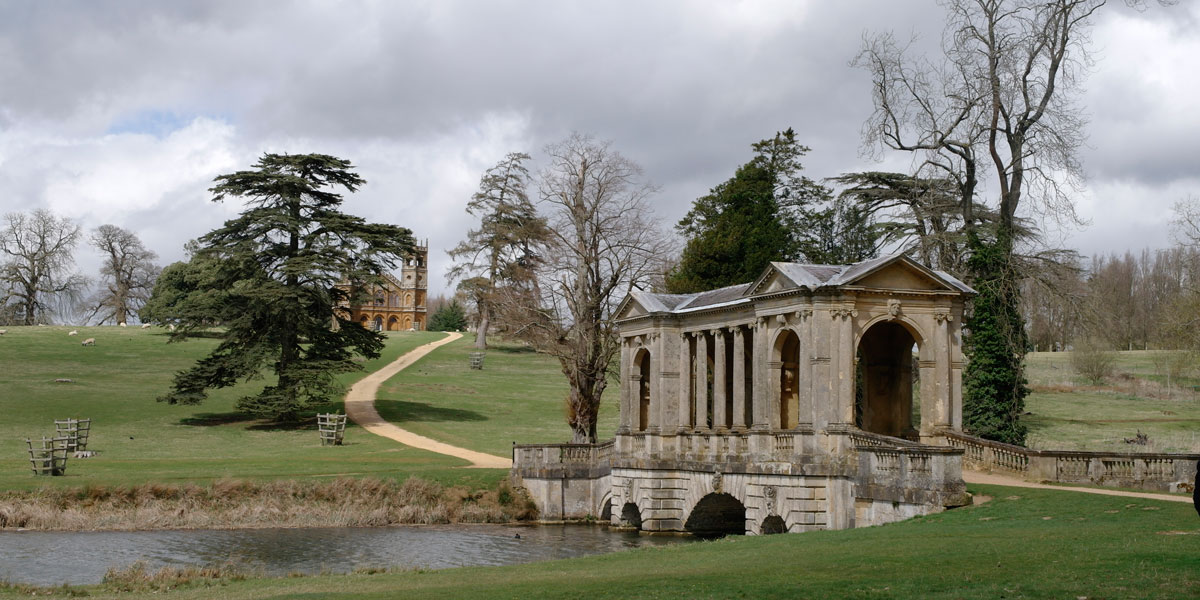
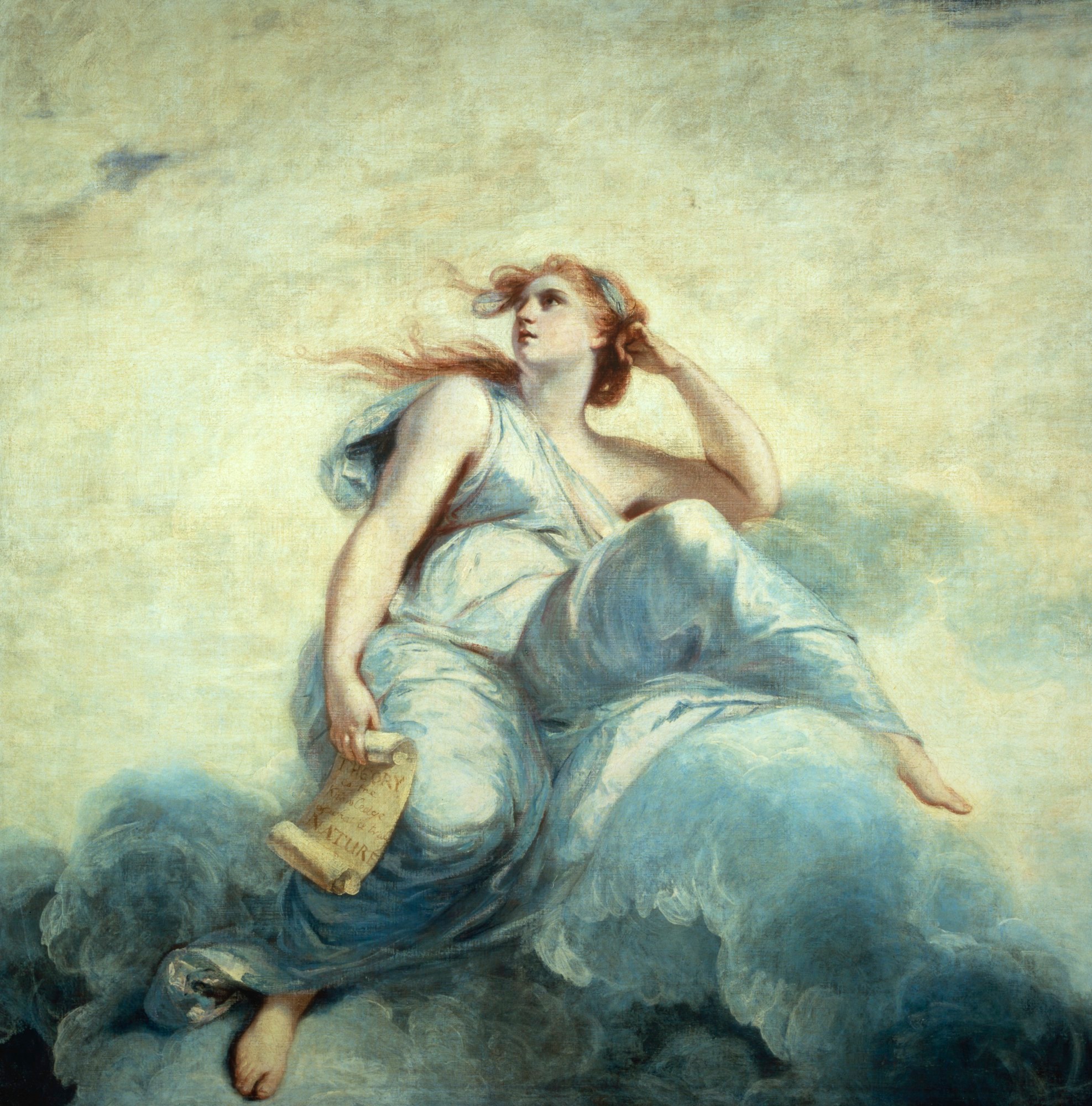
Reynolds, Theory, 1780


You cannot go on "explaining away" for ever: you will find that you have explained explanation itself away. You cannot go on "seeing through" things for ever. The whole point of seeing through something is to see something through it.

C.S. Lewis,  from The Abolition of Man

04 October 2019

Michael Tilson Thomas: Music & Emotion Through Time

Now this moment so fascinates me. I find it such a profound one. What happens when the music stops? Where does it go? What's left? What sticks with people in the audience at the end of a performance? Is it a melody or a rhythm or a mood or an attitude? And how might that change their lives? 

To me this is the intimate, personal side of music. It's the passing on part. It's the "why" part of it. And to me that's the most essential of all. Mostly it's been a person-to-person thing, a teacher-student, performer-audience thing, and then around 1880 came this new technology that first mechanically then through analogs then digitally created a new and miraculous way of passing things on, albeit an impersonal one. People could now hear music all the time, even though it wasn't necessary for them to play an instrument, read music or even go to concerts. 

And technology democratized music by making everything available. It spearheaded a cultural revolution in which artists like Caruso and Bessie Smith were on the same footing. And technology pushed composers to tremendous extremes, using computers and synthesizers to create works of intellectually impenetrable complexity beyond the means of performers and audiences. 

At the same time technology, by taking over the role that notation had always played, shifted the balance within music between instinct and intelligence way over to the instinctive side. The culture in which we live now is awash with music of improvisation that's been sliced, diced, layered and, God knows, distributed and sold. What's the long-term effect of this on us or on music? Nobody knows. 

The question remains: What happens when the music stops? What sticks with people? Now that we have unlimited access to music, what does stick with us? 

Michael Tilson Thomas

17 April 2017

Enrich.


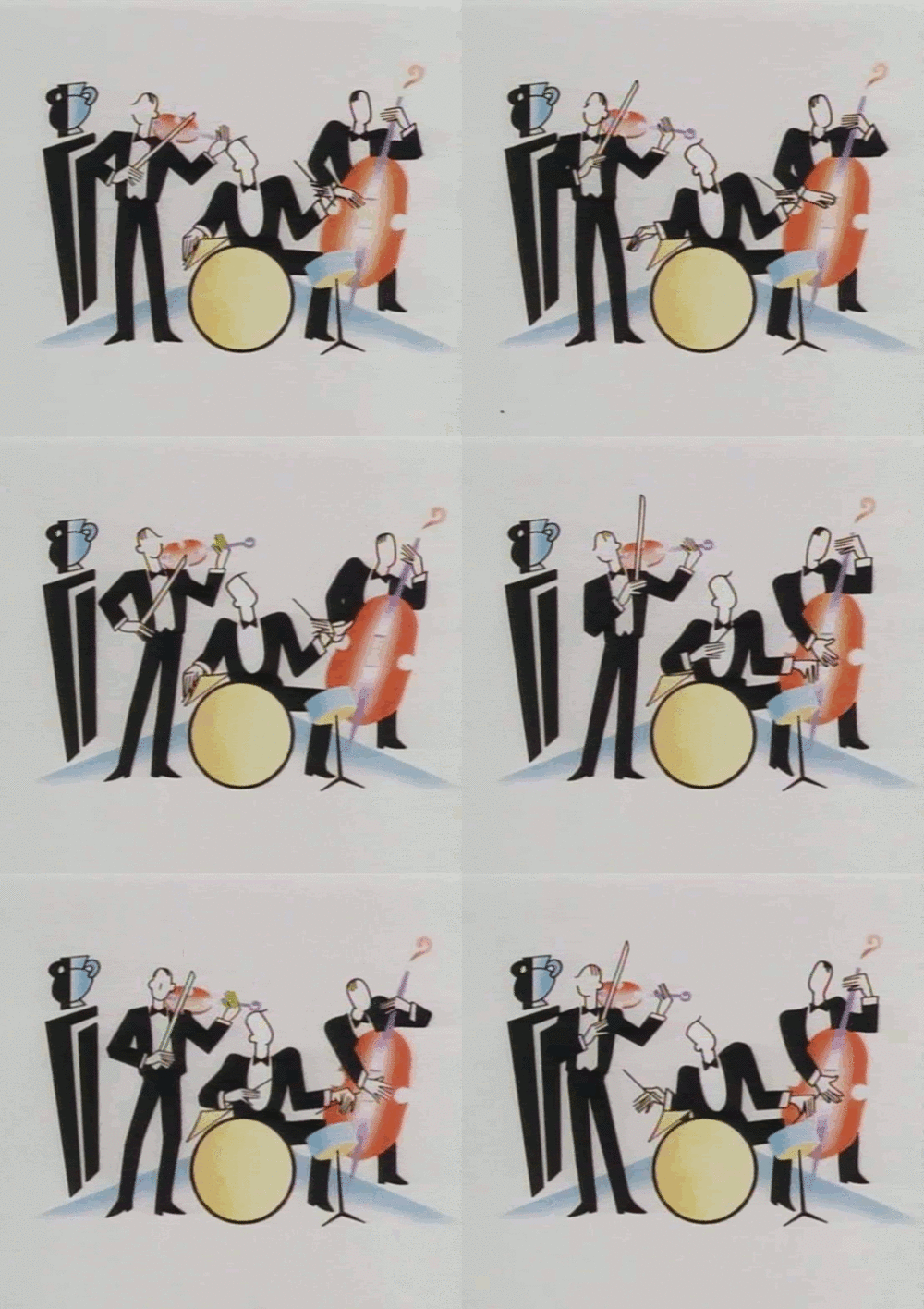
Pastiche originates from the Italian noun 'pasticcio' which is a pie filler or pâté made from diverse ingredients. This name was adopted in the 18th century for 'pasticcio' operas, which were a composite work or medley using portions of other composers work. Mozart's imitation of the baroque style is seen as a pastiche, and Tchaikovsky's, in turn, imitated Mozart. This tradition in music continued down to our own time, with Amy Winehouse's pastiches of classic soul and R&B. In film, Quentin Tarantino's Kill Bill pays homage to Westerns as well as Kung Fu cinema. Tarantino's attitude of "steal from everyone" is the cornerstone of the pasticheur's philosophy. Literary examples abound, as language itself evolves through endless repetition and rearrangements.

The word pastiche can be applied to all artists from Giotto to Picasso. The tradition of painting, like all art forms, builds on the work of previous generations, for example, Manet is a pastiche of Velasquez, Velasquez of Titian, Titian of Bellini and so it goes on. This practice is not confined to traditional painting; the modernists are just the same, as Picasso imitated African art and Gauguin the indigenous art from the Tahiti, while Goya influenced the Chapman Brothers.

Art without the influence of previous work is less worthy because it is not part of a long, artistic tradition which society understands. It is not just a matter of stealing. A work of art, within a tradition, automatically develops the language, as it is impossible to copy anything exactly. This is particularly so in architecture, where client's demands, building regulations and a myriad of other variables all conspire to produce an original work. These alterations further enrich tradition for the architects of the future.
14 May 2015

Spheres.


The natural philosophers of antiquity believed that the planets are not silent in their orbits. Setting aside the question of whether they move through air or through some finer medium like ether, it seemed logical that these great bodies should make a sound, just as moving bodies do on earth; and the many theories of the Harmony of the Spheres remain as attempts to specify what that sound could be, translated into the language of music.

There are two main schools of thought as to how this translation should be made. The first one assumes that the relative distances of the planets from the earth relate harmonically, as if they were different points on a string. This theory derives from Pythagoras’s school, in which the distance of the earth from the moon’s sphere was reckoned to be 126,000 stades. Taking this distance as equivalent to a whole-tone, the distances to the other planetary spheres were proportioned like the intervals of a diatonic scale. The second school holds that it is the motions of the planets that relate harmonically, their different rates of revolution corresponding to differences of pitch. These all presume a stationary and silent earth, though it was not certain whether the revolutions should be calculated relative to the earth, in which case Saturn, having furthest to travel, would move fastest, or relative to the zodiac, in which case Saturn would be the slowest planet, taking 30 years to make one circuit, and the moon, with its cycle of 28 days, the fastest.

There are other schemes, especially those of the Arab astronomers and the various interpreters of the “scale” of Plato’s Timaeus, but they need not concern us here. What results from every scheme prior to Kepler is that the planetary tones are derived from some existing scale or interval-sequence that cannot possibly be valid in any scientific, quantitative way, because the known proportions of either distances or motions are vastly different from the proportions of the tones used to represent them. This is where Kepler’s approach differed from all his predecessors’: his work of 1619 was the first time that a theory of celestial harmony was derived directly from astronomical observation.

Hitherto, these theories had almost unanimously assigned a single, unvarying tone to each planet, as one would expect to result from a perfect circular orbit. However, with an inspired leap of the imagination Kepler saw that the planetary tones must now vary, their pitch rising and falling in proportion to their acceleration and retardation. He calculated the exact amount by comparing the daily motion of a planet at perihelion with its daily motion at aphelion, expressed as degrees of a circle. This gave a simple proportion, which like all proportions could be translated into musical intervals by regarding the two terms as different string-lengths.
CONNECT

Thank You, Jessica.

23 December 2014

Mixing.


In 1692 an artist known only as “A. Boogert” sat down to write a book in Dutch about mixing watercolors. Not only would he begin the book with a bit about the use of color in painting, but would go on to explain how to create certain hues and change the tone by adding one, two, or three parts of water. The premise sounds simple enough, but the final product is almost unfathomable in its detail and scope.
CONNECT