"I am not one who was born in the custody of wisdom. I am one who is fond of olden times and intense in quest of the sacred knowing of the ancients." Gustave Courbet
Showing posts with label Quanah. Show all posts

21 July 2019

Machinery.


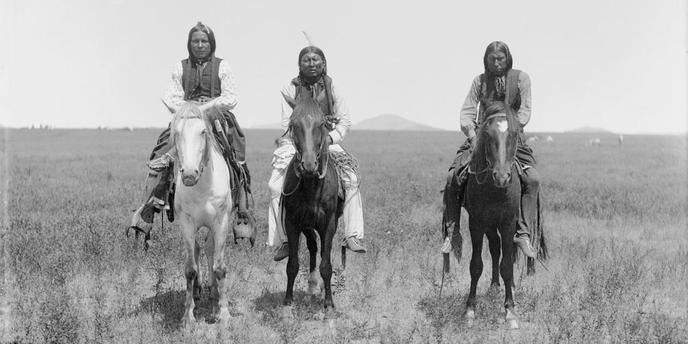
The notion that the trouble with Plains Indians was entirely due to white men was spectacularly wrongheaded. The people who cherished it, many of whom were in the U.S. Congress, the Office of Indian Affairs, and other positions of power, had no historical understanding of the Comanche tribe, no idea that the tribe's very existence was based on war and had been for a long time. No one who knew anything about the century-long horror of Comanche attacks in northern Mexico or about their systematic demolition of the Apaches or the Utes or the Tonkawas could possibly have believed that the tribe was either peaceable or blameless. Except in the larger sense, of course. The Comanches had been first on that land, if that counted for anything, and the westering Anglo-Europeans were the clear aggressors. If the taibos agreed to stop the advance of their civilization precisely at the 98th meridian, and kept their western settlements bottled up beyond the Rockies, and refused to build transcontinental railroads or permit pioneers to cross the plains on the Santa Fe and Oregon trails, then a lasting peace might have been made with the Comanches. But these same Indian advocates would never have denied the fundamental right of white Americans to fully possess their continent.

Such beatific urges toward peace, combined with relentless and brutal raiding by Comanches in Texas and the Indian Territory led to the last and most comprehensive treaty ever signed by the Indians of the southern plains. The conference that spawned it took place in October 1867 at a campground where the Kiowas held medicine dances, about seventy-five miles southwest of the present site of Wichita, Kansas. The place was known as Medicine Lodge Creek. The participants were members of a U.S. peace commission and representatives of the Comanche, Cheyenne, Arapaho, Kiowa, and Kiowa Apache tribes. The conference was the last great gathering of free Indians in the American West. The event was magnificent, surreal, doomed, absurd, and bizarre, and surely one of the greatest displays of pure western pageantry ever seen. Nine newspapers sent correspondents to cover it. The council began, as many treaty meetings did, with each side making a great effort to impress the other. The U.S. peace commission, which included the commissioner of Indian affairs and William Tecumseh Sherman, the head of the army in the West, arrived with an entourage so large that it required a wagon train and fifteen or twenty ambulances to transport them. They were accompanied by a splendidly mounted guard of five hundred soldiers in dress uniform, dragging their lethal, snub-nosed mountain howitzers behind them. The white men had brought with them a large quantity of gifts, too, and set up huge mobile kitchens to feed everyone. Soon after they arrived they sent a rush order for additional supplies of fifteen thousand pounds of sugar, six thousand pounds of coffee, ten thousand pounds of hard bread, and three thousand pounds of tobacco. There were an estimated four thousand Indians in attendance, which included one hundred Comanche lodges. 

Once the soldiers had drawn up before the Indian camp, something extraordinary happened. It was described by Alfred A. Taylor, later the governor of Tennessee, who covered the council as a reporter, as follows: 
By this time, thousands of mounted warriors could be seen concentrating and forming themselves into a wedge-shaped mass, the edge of the wedge pointing toward us. In this sort of mass formation, with all their war paraphernalia, their horses striped with war paint, the riders bedecked with war bonnets and their faces painted red, came charging in full speed toward our columns. . . . 
When within a mile of the head of our procession, the wedge, without hitch or break, quickly threw itself into the shape of a huge ring or wheel without hub or spokes, whose rim consisted of five distinct lines of these wild, untutored, yet inimitable horsemen. This ring, winding around and around with the regularity and precision of fresh-oiled machinery, approached nearer and nearer to us with every revolution. Reaching within a hundred yards of us at breakneck speed, the giant wheel or ring ceased to turn and suddenly came to a standstill.
This maneuver was enormously impressive to the white people, not least because it amounted to a test of faith. The giant, spinning wheels-within-wheels formation was a trademark of plains warfare, and the sight of it whirling ever closer would have been eerily familiar to the soldiers who sat their horses in that long parade line. There was also a hint of sadness in all of this martial pomp and circumstance, and many who were there sensed it. The very purpose of the council was to end once and for all this sort of behavior, or to render it meaningless and ceremonial. Such an exhibition, indeed, would be witnessed only a few more times before it passed forever into myth and history and phonied-up traveling shows like Buffalo Bill's.

S.C. Gwynne, from Empire of the Summer Moon: Quanah Parker and the Rise and Fall of the Comanches, the Most Powerful Indian Tribe in American History

Understand.


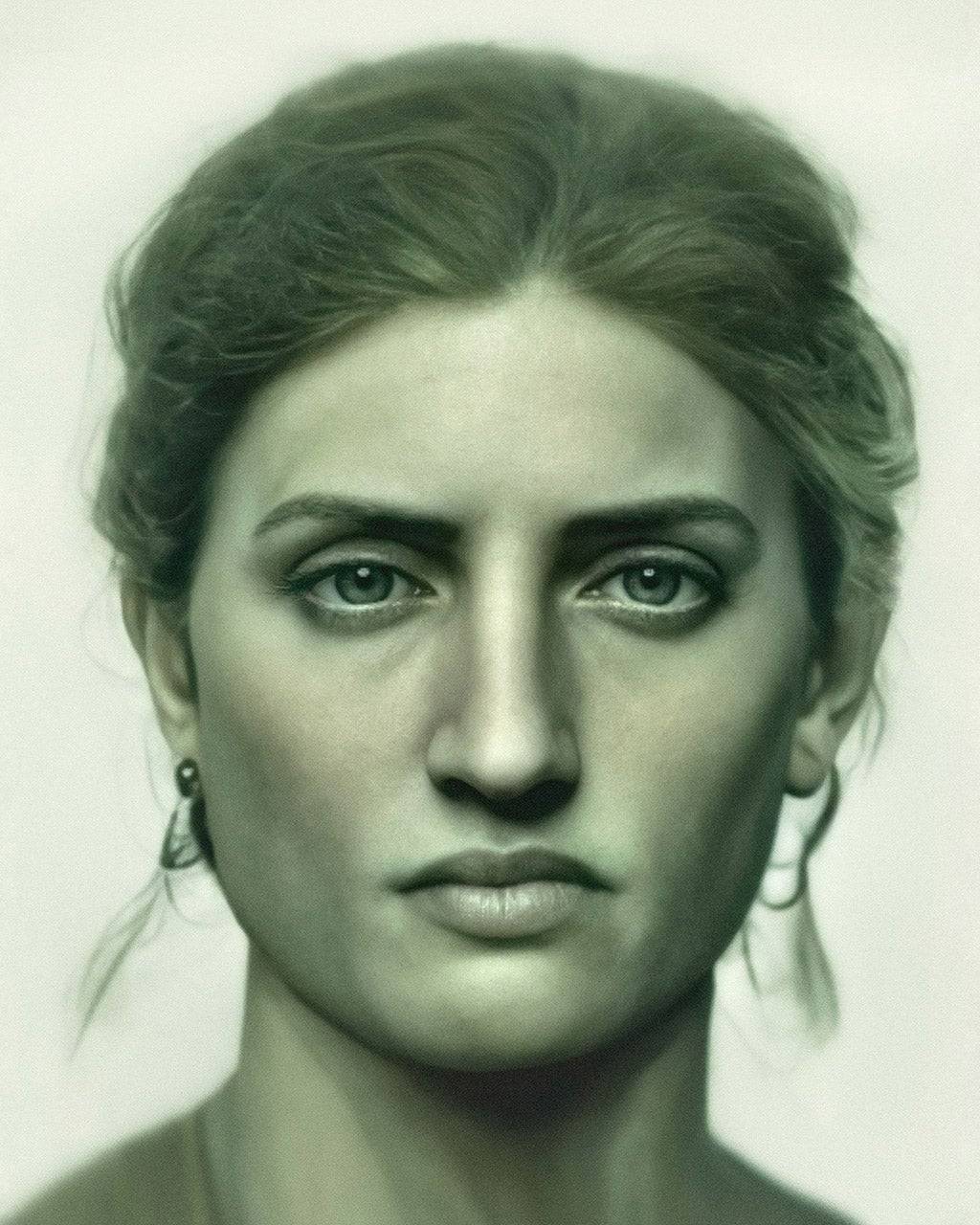
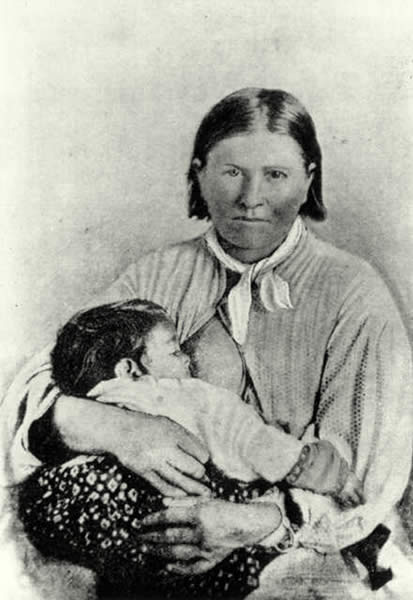
She was by all accounts a bumptious and "sprightly" child. She was dark-skinned and strikingly pretty. Everyone liked her. Cynthia Ann herself was sturdily built, with short-cropped, medium brown hair; wide-set, striking light-blue eyes; and a mouth that seemed set in anger, or resignation, or both. She was not pretty, nor was she especially unattractive; in calico she looked in most ways like a typical Anglo pioneer woman of the day, a bit stout and rather more worn-looking than her urban counterparts at a comparable age. She was also, recognizably, a Parker. One account put her at five feet seven inches and one hundred forty pounds, which would have made her a giant among Comanche women. She and her tall, muscular husband must have cut quite a figure in Comanche camps, just as her son Quanah would later on.

They passed through Weatherford-the seat of Parker County, where the worst of Peta Nocona's raids had taken place-and then stopped in Fort Worth, where Cynthia Ann became an instant celebrity. It is not known why the travelers stopped here. Some accounts say it was to have a photograph taken, but the first known photograph of her-a tintype, actually-was not taken until a month later in Austin.28 Whatever the reason, her arrival caused a great commotion as residents of Tarrant County (who totaled 6,020 that year) clamored to see the famous captive and her child. Her arrival was considered such an important event that the local children were let out of school. They came in groups to gawk at the terrified captives, who were on display in front of a general store in downtown Fort Worth. It was a sort of freak show: Cynthia Ann was bound with rope and set out atop a large box so that everyone could see her. One can only wonder what role her uncle Isaac, politician that he was, played in it. According to one witness: She was not dressed in Indian costume but wore a torn calico dress. Her hair was bronzed by the sun. Her face was tanned, and she made a pathetic figure as she stood there, viewing the crowds that swarmed about her. The tears were streaming down her face, and she was muttering in the Indian language.29 Texans could not get enough of her. There were many newspaper accounts of her return, all of which were uniformly obsessed with the idea that a pretty little nine-year-old white girl from a devout Baptist family had been transformed into a pagan savage who had mated with a redskin and borne his children and forgotten her mother tongue. She was thus, according to the morals of the day, grotesquely compromised. She had forsaken the virtues of Christianity for the wanton immorality of the Indian. That was the attraction. And all the stories assumed that everything she had done had been forced upon her. That she had suffered grievous mistreatment, had been whipped and beaten and had led a lonely and desperate existence. People simply did not believe that a Christian white woman had gone along with it voluntarily. One paper, the Clarksville Northern Standard, observed later that "her body and arms bear the marks of having been cruelly treated."30 Yet there is nothing to suggest that she was cruelly treated after the first few days of her captivity, as her cousin Rachel Plummer had described them. She was the ward of a chief, later his wife. The scars may have resulted from the practice among Comanche women of cutting themselves in mourning, often on the arms and breasts. Apparently no white people wanted to think too hard about the implications of the lovely mixed-race girl named Prairie Flower, whom her mother obviously adored.

After the carnival interlude in town, the party continued to Birdville. Here Isaac lived in a spacious "double log" cabin that was considered for many years the finest house in Tarrant County. It is not clear exactly what he thought he was going to accomplish with Cynthia Ann and her daughter. Perhaps he was simply doing what he considered to be his family duty. Perhaps he saw himself as her deliverer, imagining the day when Cynthia Ann, grateful and weeping, would embrace Jesus and forsake her savage ways.

Nothing of the sort happened. Cynthia Ann's repatriation was in fact a disaster. She was not only unrepentant. She was actively, and incessantly, hostile to her captors. She tried repeatedly to escape with her daughter, sometimes making it far into the woods and requiring a search party to find her. She was so intent on leaving that Isaac had to lock her in the house when he was away. As her legal guardian, he was empowered to do so. Cynthia Ann was being treated as though she were crazy: An entirely "free" white woman, thirty-three years old and from a prominent family, was being forcibly restrained so that she could not return to her sons and the culture that raised her. Her family believed that, owing to a life in which they assumed she had been sexually abused and beaten and enslaved, she was unable to know what was best for her. Cynthia Ann, meanwhile, always had a clear and quite correct sense of her own interests. Such treatment must have been terrible to endure.

She could not, or would not, speak English, though in any case what she remembered would have been rudimentary. She would sit for hours and hours on the wide porch of Isaac's house weeping and nursing Prairie Flower. She refused to stop her pagan devotions. One of her relatives described her ritual of worship: 
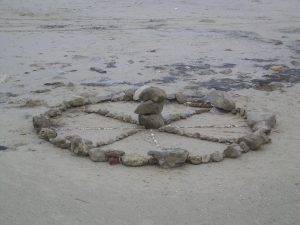
She went out to a smooth place on the ground, cleaned it off very nicely and made a circle and a cross. On the cross she built a fire, burned some tobacco, and then cut a place on her breast and let the blood drop onto the fire. She then lit her pipe and blowed smoke toward the sun and assumed an attitude of the most sincere devotion. She afterwards said through an interpreter that this was her prayer to her great spirit to enable her to understand and appreciate that these were her relatives and kindred she was among.  
The family and neighbors retaliated by demanding that Cynthia Ann and Prairie Flower give up wearing Indian clothing and insisting that Prairie Flower be given instruction in Scripture.  Cynthia Ann was uncooperative. Things did not go well.

S.C. Gwynne, from Empire of the Summer Moon: Quanah Parker and the Rise and Fall of the Comanches, the Most Powerful Indian Tribe in American History
20 July 2019

One.


We will never know how Cynthia Ann Parker felt in the weeks and months after her capture by Sul Ross. There are so few comparable events in American history. But it was painfully apparent from the earliest days that the real tragedy in her life was not her first captivity but her second. White men never quite grasped this ... In the moments before Ross's raid, she had been quite as primitive as any other plains Indian; packing thousands of pounds of buffalo meat onto mules, covered from head to toe in blood and grease, literally immersed in this elemental world that never quite left the Stone Age—a world of ceaseless toil, hunger, constant war, and early death. But also of pure magic, of beaver ceremonies and eagle dances, of spirits that inhabited springs, trees, rocks, turtles, and crows; a place where people danced all night and sang bear medicine songs, where wolf medicine made a person invulnerable to bullets, dream visions dictated tribal politic, and ghosts were alive in the wind.

On grassy plains and timbered river bottoms from Kansas to Texas, Cynthia Ann-Nautdah-had drifted in the mystical cycles of the seasons, living in that random, terrifying, bloody, and intensely alive place where nature and divinity became one.

And then, suddenly, all of it disappeared. Instead of Stone Age camps aswirl in magic and taboo and scented smoke from mesquite lodge fires, she found herself sitting on taffeta chairs in drawing rooms on the outer margins of the Industrial Revolution, being interrogated by polite uncomprehending white men who believed in a single God and in a supremely rational universe where everything could be explained. This new culture was every bit as alien as the one she confronted after the attack on Parker's Fort. It was as though she had walked yet again through a door into another world, quite as complete as the one she had left and, in all of its mystifying details, completely different.

S.C. Gwynne, from Empire of the Summer Moon: Quanah Parker and the Rise and Fall of the Comanches, the Most Powerful Indian Tribe in American History
11 July 2019

Optimism.


The central truth of their lives was the past, the dimming memory of the wild, ecstatic freedom of the plains, of the days when Comanche warriors in black buffalo headdresses rode unchallenged from Kansas to northern Mexico, of a world without property or boundaries. What Quanah had that the rest of his tribe in the later years did not was that most American of human traits: boundless optimism.

S.C. Gwynne, from Empire of the Summer Moon: Quanah Parker and the Rise and Fall of the Comanches, the Most Powerful Indian Tribe in American History

06 July 2019

Lethal.

Robinson, Quanah Parker, 1891


Hoping to surprise the enemy in its camps, Mackenzie ordered a night march. What he got instead was an object lesson in the hazards of High Plains warfare. His men struggled through steep terrain, dense brush, ravines, and arroyos. After hours of what Carter described as “trials and tribulations and much hard talk verging on profanity” and “many rather comical scenes,” they fetched up bruised and battered in the dead end of a small canyon and had to wait until daybreak to find their way out. A few hours later they reached the Freshwater Fork of the Brazos (now known as the White River), deep in Indian territory, in a broad, shallow, thirty-mile-long valley that averaged 1,500 feet in width and was cut by smaller side canyons.

The place, known as Blanco Canyon, was located just to the east of present-day Lubbock. It was one of the Quahadis’ favorite campgrounds. Whatever surprise Mackenzie had hoped for was gone; the Tonkawa scouts soon realized they were being shadowed by four Comanche warriors, who had been watching their every move, presumably including the blunders of the night march. The Tonks gave chase, but “the hostiles being better mounted soon distanced their pursuers and vanished into the hills,” Carter wrote. This was not surprising: In two hundred years of enmity, the Tonkawas had never come close to matching the horsemanship of the Comanches. Few tribes could. As a result, while the cavalrymen and dragoons had no idea where the Comanches were camped, Quanah knew precisely where Mackenzie’s men were. As though to make certain of that, Mackenzie allowed the men the indulgence of campfires, which was tantamount to painting a large arrow in the canyon pointing to their camp. Some of the companies erred yet again by failing to place guards among the horses.
Around midnight, the regiment was awakened by a succession of unearthly, high-pitched yells. Those were followed by shots and more yells, and suddenly the camp was alive with Comanches riding at full gallop. Exactly what the Indians were doing was soon apparent: Mingled with the screams and gunshots and general mayhem was another sound, only barely audible at first, then rising to something like rolling thunder. The men quickly realized that it was the sound of stampeding horses. Their horses. Amid shouts of “Every man to his lariat!” six hundred panicked horses tore loose through the camp, rearing, jumping, and plunging at full speed. Lariats snapped with the sound of pistol shots; iron picket pins, which a few minutes before had been used to secure the horses, now whirled and snapped about their necks like airborne sabers. Men tried to grab them and were thrown to the ground and dragged among the horses, their hands lacerated and bleeding.

When it was all over, the soldiers discovered that Quanah and his warriors had made off with seventy of their best horses and mules, including Colonel Mackenzie’s magnificent gray pacer. In West Texas in 1871, stealing someone’s horse was often equivalent to a death sentence. It was an old Indian tactic, especially on the High Plains, to simply take a white man’s horse and leave him to die of thirst or starvation. Comanches had used it to lethal effect against the Spanish in the early eighteenth century. In any case, an unmounted Army regular stood little chance against a mounted Comanche. This midnight raid was Quanah’s calling card, a clear message that hunting him and his Comanche warriors in their homeland was going to be a difficult and treacherous business.
S.C. Gwynne, from Empire of the Summer Moon: Quanah Parker and the Rise and Fall of the Comanches, the Most Powerful Indian Tribe in American History