"I am not one who was born in the custody of wisdom. I am one who is fond of olden times and intense in quest of the sacred knowing of the ancients." Gustave Courbet
Showing posts with label Journal of the American Revolution. Show all posts

04 July 2024

Separate.


Provocative arguments made by the Journal of the American Revolution on the 27th grievance of the Declaration of Independence ...
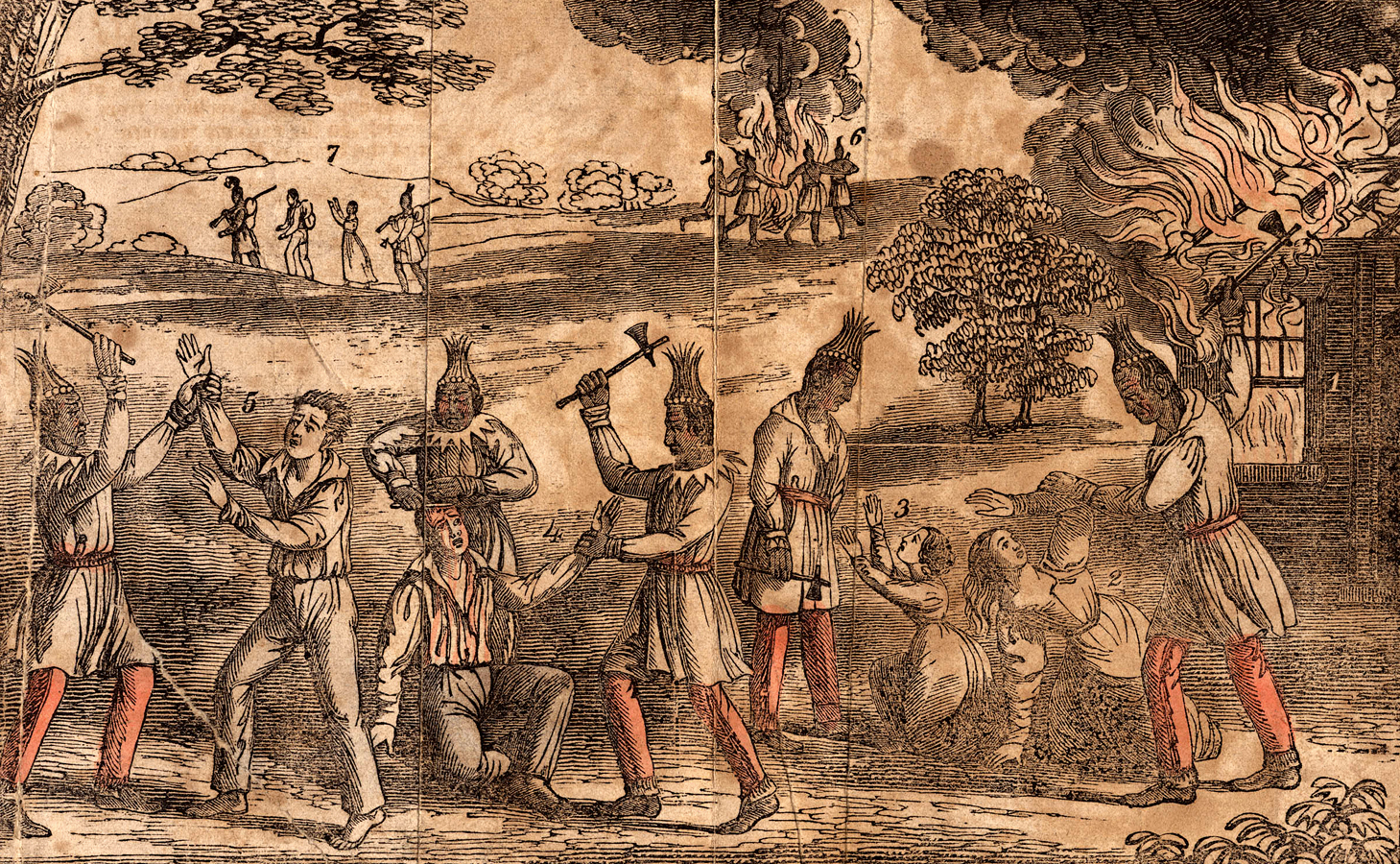
The combination of “excited” used as a word of action, and “domestic insurrections amongst us,” inspires much debate. One must conclude that those who read those words would take them at face value, believing that without one the other could not occur. Most importantly, both the enslaved, who were not specifically identified in the grievance, and Indian Savages, had their rightfully-held grievances which would not be solved by any actions the Americans intended to undertake. Further, the grievances these two categories of people had were not with the British but with the Americans themselves; given time the insurrection the Americans feared was bound to happen regardless of any participation by the British.

The raw fact is that the protagonists for independence were not in the majority. The patriot leaders were faced with the challenge of indirectly controlling the actions of the population by controlling their attitudes and playing on their base fears. Nowhere but in a democracy must leaders marshal opinions when their position on various matters is not commonly and widely held. The control that the patriots exercised over the population was weak. Therefore, the use of propaganda was a primary necessity. Historian Philip Davidson describes it as a prerequisite to demanding action. Josiah Quincy understood that emotion, not reason, determined action. The creators of the Declaration needed to focus on crowd psychology and stoke it into a mob rule.

While the English amongst them might have gradually and ultimately arrived at the conclusion that separation from England was wholly necessary, the steady influx of non-English people made things more difficult. Indifferent to British policy and certainly having no sense of loyalty to the Crown, these Europeans created a divergence in institutions, customs, language, and interests. The question of slavery was complicated by the fact that the Quakers in particular were opposed to such practice. Despite such protestations, all Europeans, it could be agreed, would be regarded by both enslaved and savages alike as equal and complicit in any real or perceived damages incurred. The Revolution was at best the work of an aggressive minority. Samuel Adams would harp, “All are not dead; and where there is a spark of patriotic fire, we will enkindle it.” Yet his cousin John Adams along with Josiah Quincy warned of the “fatal effects of the policy of standing armies." They issued this warning at the annual commemoration of the Boston Massacre, and the trial in which John Adams and Quincy successfully defended the British soldiers that committed the atrocity. Here lies the problem with the Declaration of Independence. It serves to outline the several grievances of the Americans, yet introduces hypocrisy in its body and opens itself to challenge when filtered through logic and fact. Still, none of the grievances were without merit and at least some modicum of truth.

The deconstruction of the Declaration of Independence should require the reader to separate the grievances into two categories; those that addressed specific policy and governance, and those that manipulated and provoked the base fears and prejudices of the population. The 27th grievance falls into the latter category. Yet, as has been previously stated, enough truth lay in the charges for it to be considered with merit. The broadsides and papers of the time exacerbated and proclaimed all such instances to be representative examples of the behavior of the whole of the British army and its proxies.

04 July 2023

Common.


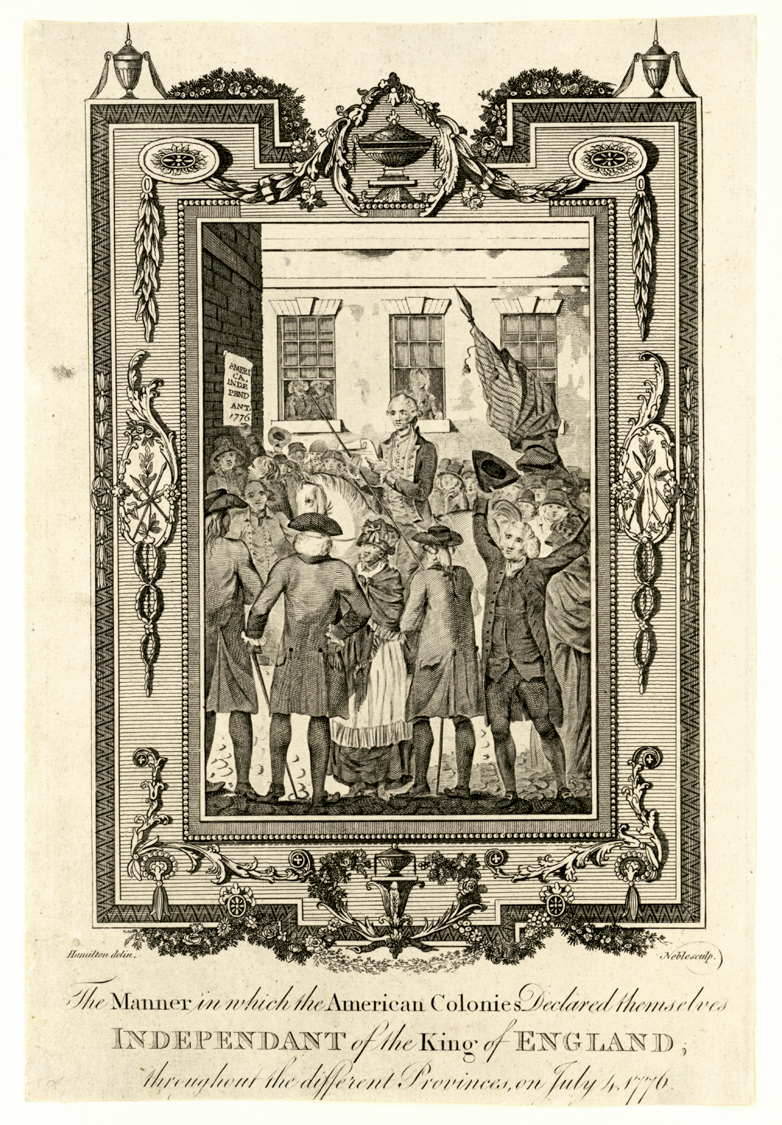
The Journal of the American Revolution provides accounts of the first reading of the Declaration of Independence ...
In 1878 Demorest’s Monthly Magazine published an article which said, “Timothy Matlack is probably entitled to especial commemoration and veneration as the actual reader of the Declaration of Independence, from the State House steps on July 4, 1776.” This witness who identified Matlack as the speaker was Anthony Morris, who was ten years old at the time. Morris was later a merchant and lawyer in Philadelphia, a Speaker of the Pennsylvania State Senate, and a minister to Spain for the United States. He gave his account later in life to the spouse of a Matlack descendant. He told her:
Did you know that your husband’s great grandfather was the first one to read the Declaration of Independence to the people of Philadelphia from the State House steps? I was a young boy, July 4, 1776, at the time and stood in the crowd and heard him. Whether he was chosen as a reader for his stentorian voice or for the position he held in the Commonwealth I cannot tell. I only know that I heard him.
A local historian named A. M. Stackhouse later asked, “May not the occasion referred to by Mr. Morris have been an unofficial reading by Colonel Matlack? He was at that time clerk of Congress. The last mention made of him in that capacity is on the 11th day of July 1776.”  The testimony of Anthony Morris is the only one that names Matlack as the speaker.

Another account identifies another witness, a militia man named George Piper. The author of a brief biography stated that “Piper listened to the reading of the Declaration of Independence in front of the State House, Philadelphia, July 4, 1776.”

Although legal scholar Ritz was unaware of both the Morris and Piper testimonies, he pointed to the contemporaneous journal of Henry Melchior Muhlenberg. On July 2, 1776, Muhlenberg wrote: “It is said that the Continental Congress resolved to declare the thirteen united colonies free and independent.” On July 4, 1776, he wrote: “Today the Continental Congress openly declared the united provinces of North America to be free and independent  states.” The change in emphasis from “resolved to declare” to “openly declared” suggests Muhlenberg witnessed or heard about the public reading(s).

In her book American Scripture: Making of the Declaration of Independence, the historian Pauline Maier refers readers to Ritz “For evidence that the Declaration was first read publicly on July 4 to a small audience that included few ‘respectable’ people.” Regarding this characterization of the people gathered that day, both Biddle and Logan said they were members of the “lower” sector of society. In another diary entry Logan wrote derisively, “The crowd that assembled at the State House was not great and those among them who joined in the acclamation were not the most sober or reflecting.”  This description helps us distinguish between the informal crowd of working artisans and laborers who heard the Declaration read on July 4, and the formal one of wealthier merchants and lawyers who attended the grand ceremony on July 8.

The first people to hear the words of the Declaration were the common people standing out on Chestnut Street on July 4, 1776. The first to read them in public was likely either Timothy Matlack or Charles Thomson. As the people’s tribune, Matlack would have been addressing his constituents. If the historian Deborah Norris Logan is correct, the crowd followed the speaker to the Court House where he read the Declaration a second time.