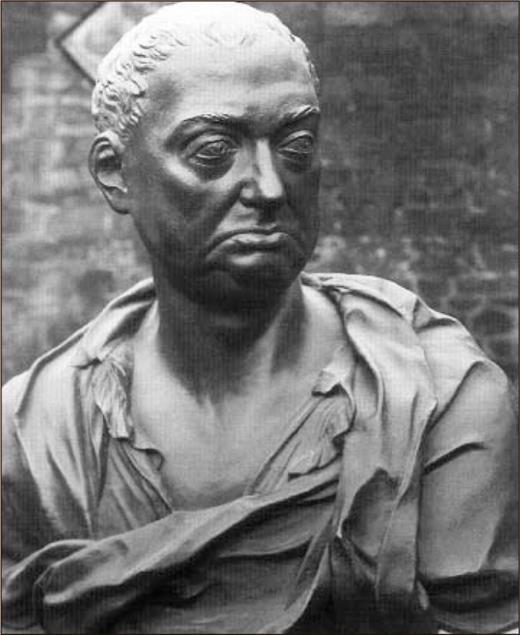
"I am not one who was born in the custody of wisdom. I am one who is fond of olden times and intense in quest of the sacred knowing of the ancients." Gustave Courbet
Showing posts with label Caldecott. Show all posts

15 December 2024

The Oyster Months Yuletide Songbook

Caldecott, The Yule Log, 1886
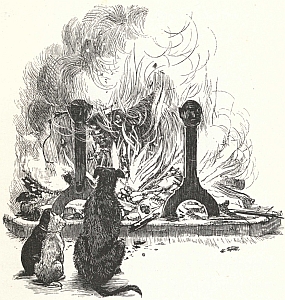


An Oyster Months-approved songbook of Yuletide drones and dirges ...
The pitchy gloom without makes the heart dilate on entering the room filled with the glow and warmth of the evening fire. The ruddy blaze diffuses an artificial summer and sunshine through the room, and lights up each countenance into a kindlier welcome. Where does the honest face of hospitality expand into a broader and more cordial smile—where is the shy glance of love more sweetly eloquent—than by the winter fireside? and as the hollow blast of wintry wind rushes through the hall, claps the distant door, whistles about the casement, and rumbles down the chimney, what can be more grateful than that feeling of sober and sheltered security with which we look round upon the comfortable chamber and the scene of domestic hilarity?

Washington Irving, from "Old Christmas," found in The Sketchbook of Geoffrey Crayon, Gent.
Winter
VOCES8


Silent Night: Early Christmas Music & Carols
Arianna Savall and Petter Udland Johansen


Yule
Trio MediƦval


Winter Songs
Ola Gjeilo, Choir Of Royal Holloway, and 12 Ensemble


On a Cold Winter's Day: Early Christmas Music and Carols from the British Isles
Quadriga Consort


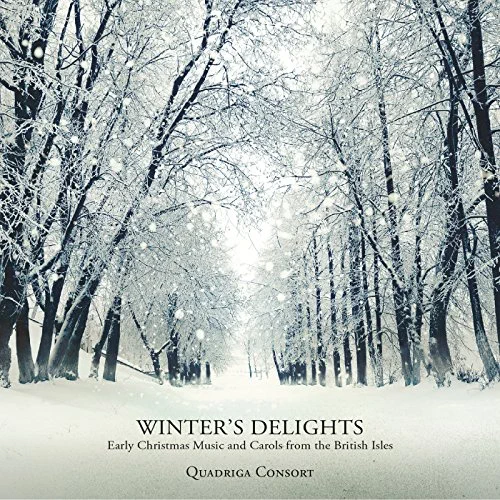
Winter's Delights: Early Christmas Music and Carols from the British Isles
Quadriga Consort

On Yoolis Night: Medieval Carols and Motets
Anonymous 4


Sing Heigh Ho! Unto the Green Holly!
Folger Consort


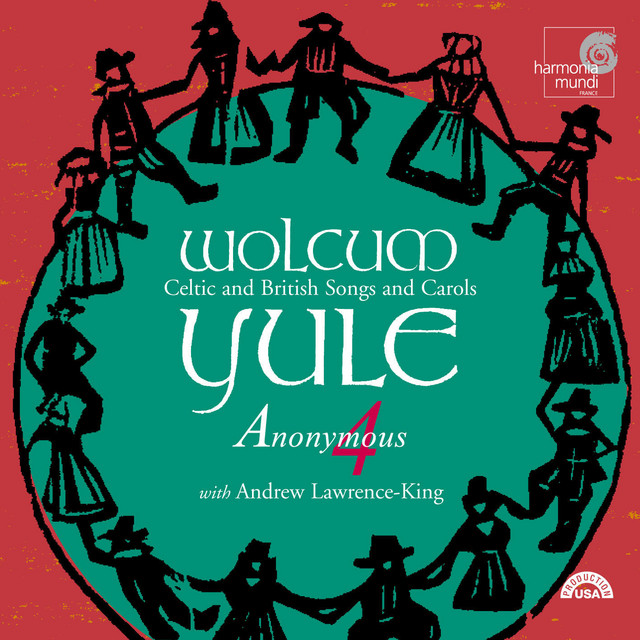
Wolcum Yule: Celtic and British Songs and Carols
Anonymous 4

A Deep But Dazzling Darkness
Apollo5

14 December 2019

Animation.


Perhaps it might be owing to the pleasing serenity that reigned in my own mind, that I fancied I saw cheerfulness in every countenance throughout the journey. A stage coach, however, carries animation always with it, and puts the world in motion as it whirls along. The horn sounded at the entrance of a village, produces a general bustle. Some hasten forth to meet friends; some with bundles and bandboxes to secure places, and in the hurry of the moment can hardly take leave of the group that accompanies them. In the meantime, the coachman has a world of small commissions to execute. Sometimes he delivers a hare or pheasant; sometimes jerks a small parcel or newspaper to the door of a public-house; and sometimes, with knowing leer and words of sly import, hands to some half-blushing, half-laughing housemaid an odd-shaped billet-doux from some rustic admirer. As the coach rattles through the village, every one runs to the window, and you have glances on every side of fresh country faces, and blooming giggling girls. At the corners are assembled juntas of village idlers and wise men, who take their stations there for the important purpose of seeing company pass; but the sagest knot is generally at the blacksmith's, to whom the passing of the coach is an event fruitful of much speculation. The smith, with the horse's heel in his lap, pauses as the vehicle whirls by; the Cyclops round the anvil suspend their ringing hammers, and suffer the iron to grow cool; and the sooty spectre in brown paper cap, labouring at the bellows, leans on the handle for a moment, and permits the asthmatic engine to heave a long-drawn sigh, while he glares through the murky smoke and sulphureous gleams of the smithy.

Perhaps the impending holiday might have given a more than usual animation to the country, for it seemed to me as if everybody was in good looks and good spirits. Game, poultry, and other luxuries of the table, were in brisk circulation in the villages; the grocers', butchers', and fruiterers' shops were thronged with customers. The housewives were stirring briskly about, putting their dwellings in order; and the glossy branches of holly, with their bright red berries, began to appear at the windows. The scene brought to mind an old writer's account of Christmas preparations:—"Now capons and hens, besides turkeys, geese, and ducks, with beef and mutton—must all die; for in twelve days a multitude of people will not be fed with a little. Now plums and spice, sugar and honey, square it among pies and broth. Now or never must music be in tune, for the youth must dance and sing to get them a heat, while the aged sit by the fire. The country maid leaves half her market, and must be sent again, if she forgets a pack of cards on Christmas eve. Great is the contention of Holly and Ivy, whether master or dame wears the breeches. Dice and cards benefit the butler; and if the cook do not lack wit, he will sweetly lick his fingers."

Washington Irving, "The Stage Coach" from Old Christmas

CONNECT

07 December 2019

Felicity.


A man might then beholdAt Christmas, in each hallGood fires to curb the cold,And meat for great and small.The neighbours were friendly bidden,And all had welcome true,The poor from the gates were not chidden,When this old cap was new. 
Old Song
There is nothing in England that exercises a more delightful spell over my imagination than the lingerings of the holiday customs and rural games of former times. They recall the pictures my fancy used to draw in the May morning of life, when as yet I only knew the world through books, and believed it to be all that poets had painted it; and they bring with them the flavour of those honest days of yore, in which, perhaps with equal fallacy, I am apt to think the world was more home-bred, social, and joyous than at present. I regret to say that they are daily growing more and more faint, being gradually worn away by time, but still more obliterated by modern fashion. They resemble those picturesque morsels of Gothic architecture which we see crumbling in various parts of the country, partly dilapidated by the waste of ages, and partly lost in the additions and alterations of latter days. Poetry, however, clings with cherishing fondness about the rural game and holiday revel, from which it has derived so many of its themes,--as the ivy winds its rich foliage about the Gothic arch and mouldering tower, gratefully repaying their support by clasping together their tottering remains, and, as it were, embalming them in verdure.

Of all the old festivals, however, that of Christmas awakens the strongest and most heartfelt associations. There is a tone of solemn and sacred feeling that blends with our conviviality, and lifts the spirit to a state of hallowed and elevated enjoyment. The services of the church about this season are extremely tender and inspiring. They dwell on the beautiful story of the origin of our faith, and the pastoral scenes that accompanied its announcement. They gradually increase in fervour and pathos during the season of Advent, until they break forth in full jubilee on the morning that brought peace and good-will to men. I do not know a grander effect of music on the moral feelings than to hear the full choir and the pealing organ performing a Christmas anthem in a cathedral, and filling every part of the vast pile with triumphant harmony.

It is a beautiful arrangement, also derived from days of yore, that this festival, which commemorates the announcement of the religion of peace and love, has been made the season for gathering together of family connections, and drawing closer again those bands of kindred hearts which the cares and pleasures and sorrows of the world are continually operating to cast loose; of calling back the children of a family who have launched forth in life, and wandered widely asunder, once more to assemble about the paternal hearth, that rallying-place of the affections, there to grow young and loving again among the endearing mementoes of childhood.

There is something in the very season of the year that gives a charm to the festivity of Christmas. At other times we derive a great portion of our pleasures from the mere beauties of nature. Our feelings sally forth and dissipate themselves over the sunny landscape, and we "live abroad and everywhere." The song of the bird, the murmur of the stream, the breathing fragrance of spring, the soft voluptuousness of summer, the golden pomp of autumn; earth with its mantle of refreshing green, and heaven with its deep delicious blue and its cloudy magnificence, all fill us with mute but exquisite delight, and we revel in the luxury of mere sensation. But in the depth of winter, when nature lies despoiled of every charm, and wrapped in her shroud of sheeted snow, we turn for our gratifications to moral sources. The dreariness and desolation of the landscape, the short gloomy days and darksome nights, while they circumscribe our wanderings, shut in our feelings also from rambling abroad, and make us more keenly disposed for the pleasures of the social circle. Our thoughts are more concentrated; our friendly sympathies more aroused. we feel more sensibly the charm of each other's society, and are brought more closely together by dependence on each other for enjoyment. Heart calleth unto heart; and we draw our pleasures from the deep wells of living kindness, which lie in the quiet recesses of our bosoms: and which when resorted to, furnish forth the pure element of domestic felicity.

Washington Irving, from "Christmas"

CONNECT

25 December 2017

Keep.

Caldecott, Old Christmas Frontispiece, 1886


From noise of scare-fires rest ye free,
From murders Benedicite!
From all mischances that may fright
Your pleasing slumbers in the night:
Mercy secure ye all, and keep
The goblin from ye, while ye sleep.
Past one o'clock, and almost two,
My masters all, "Good day to you."

Robert Herrick

09 December 2017

Christmas.


Archive.org has a facsimile version of Washington Irving's Old Christmas, illustrated by Randolf Caldecott ... HERE.