About two hours ago, when I went to bed, I heard what I took
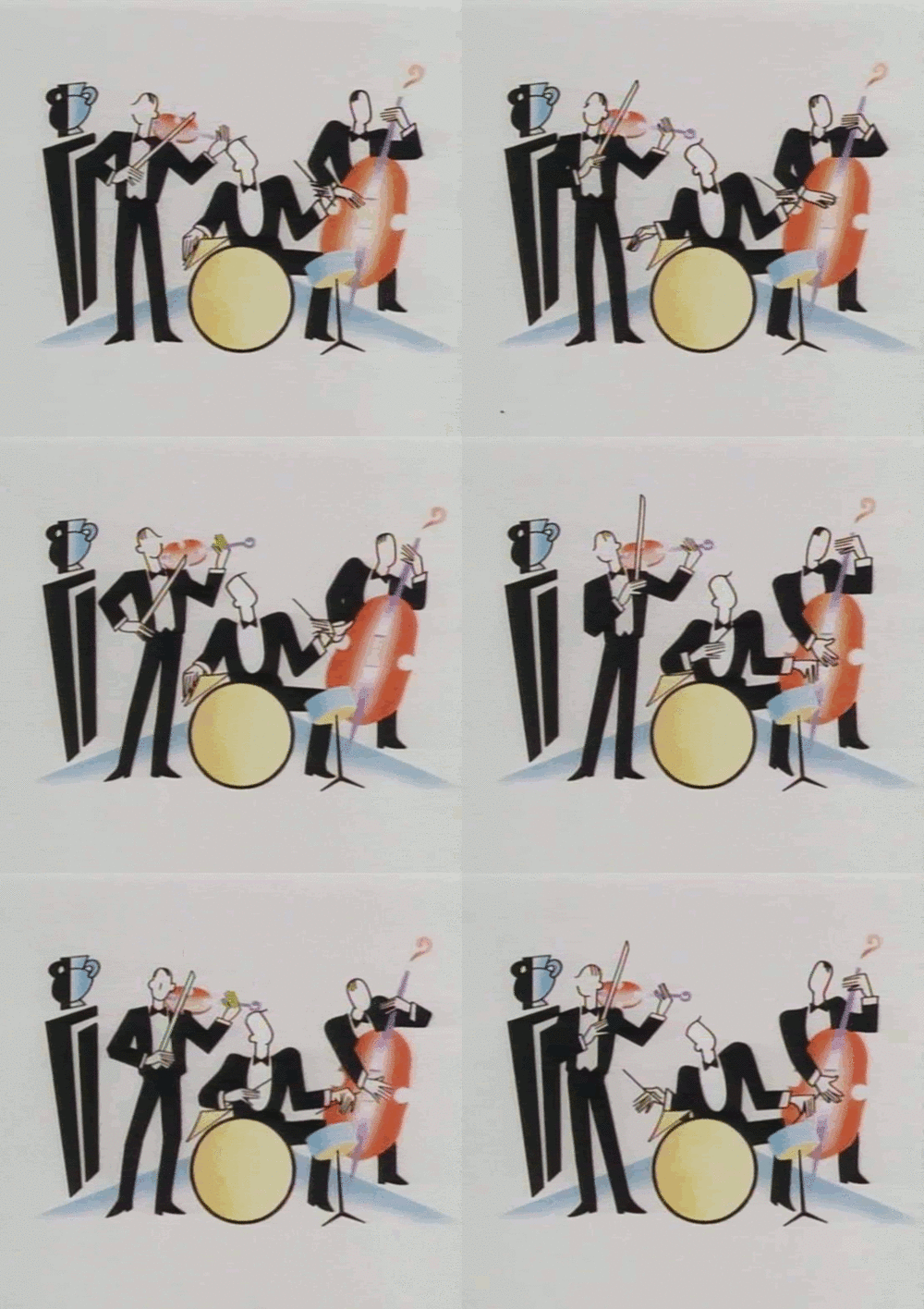
to be signs of merry making in the mews. A violin squeaked, there was a noise
of loud voices & laughter. It reminded me how once, as a child, I woke at
dead of night: it seemed to me — 8 or 9 I suppose really & I heard strange
& horrible music as of a midnight barrel organ, & was so frightened
that I had to crawl to the cot next mine for sympathy. But I am too old for
that kind of blind terror; my critical mind when awake enough to think at all
about it, decided that the fiddle squeaking &c. was token of a ball — not
in our street — but in Queens Gate — the tall row of houses that makes a
background to the mews. The music grew so loud, so rhythmic — as the night drew
on & the London roar lessened, that I threw up my window, leant out into
the cool air, & saw the illuminations which told surely from what house the
music came.
Now I have been listening for an hour. The music stops — I
hear the chatter, the light laughter of womens' voices — the deeper notes of
festive males. I can almost see the couples wandering out from the ball rooms
to the balconies which are starred with small lamps. They look straight across
the mews to me. The music has begun again — oh dear — the swing & the lilt
of that waltz makes me almost feel as though I could jump from my bed &
dance to it too. That is the quality which dance music has — no other: it stirs
some barbaric instinct — lulled asleep in our sober lives — you forget
centuries of civilization in a second, & yield to that strange passion
which sends you madly whirling round the room — oblivious of everything save
that you must keep swaying with the music — in & out, round & round —
in the eddies & swirls of the violins. It is as though some swift current
of water swept you along with it. It is magic music. Here the bars run low,
passionate, regretful, but always in the same pulse. We dance as though we knew
the vanity of dancing. We dance to drown our sorrows — but dance, dance — If
you stop you are lost. This one night we will be mad — dance lightly — raise
our hearts as the beat strengthens, grows buoyant — careless, defiant. What
matters anything so long as ones step is in time — so long as one’s whole body
& mind are dancing too — what shall end it?
The music again! I begin to think someone has wound up this
weary waltz &am it will go on at intervals all thro‘ the night. Nobody is
dancing in time to it now I am sure — or they dance as pale phantoms because so
long as the music sounds they must dance — no help for them. Surely the music
that seemed to ebb before, has gathered strength — it sounds louder &
louder — it swings faster & faster — no one can stop dancing now. They are
sucked in by the music. And how weary they look — pale men — fainting women —
crumpled silks; trampled flowers. They are no longer masters of the dance
— it has taken possession of them. And all joy & life has left it, & is
diabolical, a twisting livid serpent, writhing in cold sweat & agony, & crushing the frail dancers in its contortions. What has brought about the
change? It is the dawn.