"I am not one who was born in the custody of wisdom. I am one who is fond of olden times and intense in quest of the sacred knowing of the ancients." Gustave Courbet
Showing posts with label Old Christmas. Show all posts

06 December 2025

Welcome.

Meadows, Merry Christmas, 1847


OLD CHRISTMAS RETURNED

All you that to feasting and mirth are inclined,
Come here is good news for to pleasure your mind,
Old Christmas is come for to keep open house,
He scorns to be guilty of starving a mouse !
     Then come, boys, and welcome for diet the chief,
     Plum-pudding, goose, capon, minced pies, and roast beef.

A long time together he hath been forgot,
They scarce could afford for to hang on the pot ;
Such miserly sneaking in England hath been,
As by our forefathers ne'er used to be seen ;
     But now he's returned, you shall have in brief,
     Plum-pudding, goose, capon, minced pies, and roast beef.

The times were ne'er good since old Christmas was fled,
And all hospitality hath been so dead,
No mirth at our festivals late did appear,
They would scarcely part with a cup of March beer ;
     But now you shall have, for the ease of your grief,
     Plum-pudding, goose, capon, minced pies, and roast beef.

The butler and baker, they now may be glad,
The times they are mended, though they have been bad;
The brewer, he likewise may be of good cheer,
He shall have good trading for ale and strong beer ;
     All trades shall be jolly, and have, for relief,
     Plum-pudding, goose, capon, minced pies, and roast beef.

The holly and ivy about the walls wind,
And show that we ought to our neighbours be kind,
Inviting each other for pastime and sport,
And where we best fare, there we most do resort,
     We fail not for victuals, and that of the chief,
     Plum-pudding, goose, capon, minced pies, and roast beef.

The cooks shall be busied, by day and by night,
In roasting and boiling, for taste and delight ;
Their senses in liquor that's nappy they'll steep,
Though they be afforded to have little sleep ;
     They still are employed for to dress us, in brief,
     Plum-pudding, goose, capon, minced pies, and roast beef.

Although the cold weather doth hunger provoke,
'Tis a comfort to see how the chimneys do smoke ;
Provision is making for beer, ale, and wine,
For all that are willing or ready to dine ;
     Then haste to the kitchen, for diet the chief —
     Plum-pudding, goose, capon, minced pies, and roast beef.

All travellers, as they do pass on their way,
At gentlemen's halls are invited to stay,
Themselves to refresh, and their horses to rest,
Since that he must be Old Christmas's guest ;
     Nay, the poor shall not wait, but have, for relief,
     Plum-pudding, goose, capon, minced pies, and roast beef.

Now Mock-beggar Hall it no more shall stand empty,
But all shall be furnished with freedom and plenty ;
The hoarding old misers, who used to preserve
The gold in their coffers, and see the poor starve,
     Must now spread their tables, and give them, in brief,
     Plum-pudding, goose, capon, minced pies, and roast beef.

The court, and the city, and country are glad
Old Christmas is come to cheer up the sad ;
Broad pieces and guineas about now shall fly,
And hundreds be losers by cogging a die,
     Whilst others are feasting with diet the chief
     Plum-pudding, goose, capon, minced pies, and roast beef.

Those that have no coin at the cards for to play,
May sit by the fire and pass time away,
And drink of their moisture contented and free
" My honest good fellow, come here is to thee ! "
     And when they are hungry, full to their relief,
     Plum-pudding, goose, capon, minced pies, and roast beef.

Young gallants and ladies shall foot it along,
Each room in the house to the music shall throng,
Whilst jolly carouses about they shall pass,
And each country swain trip about with his lass ;
     Meantime goes the caterer to fetch in the chief
     Plum-pudding, goose, capon, minced pies, and roast beef.

The cooks and the scullion who toil in their frocks,
Their hopes do depend upon their Christmas-box ;
There are very few that do live on the earth
But enjoy at this time either profit or mirth ;
     Yea, those that are charged to find all relief,
     Plum-pudding, goose, capon, minced pies, and roast beef.

Then well may we welcome Old Christmas to town,
Who brings us good cheer and liquor so brown,
To pass the cold winter away with delight,
We feast it all day, and we frolic all night ;
     Both hunger and cold we keep out with relief,
     Plum-pudding, goose, capon, minced pies, and roast beef.

Then let all curmudgeons, who dote on their wealth,
And value their treasure much more than their health,
Go hang themselves up, if they will be so kind,
Old Christmas with them but small welcome shall find :
     They will not afford to themselves, without grief,
     Plum-pudding, goose, capon, minced pies, and roast beef.

Preserve.


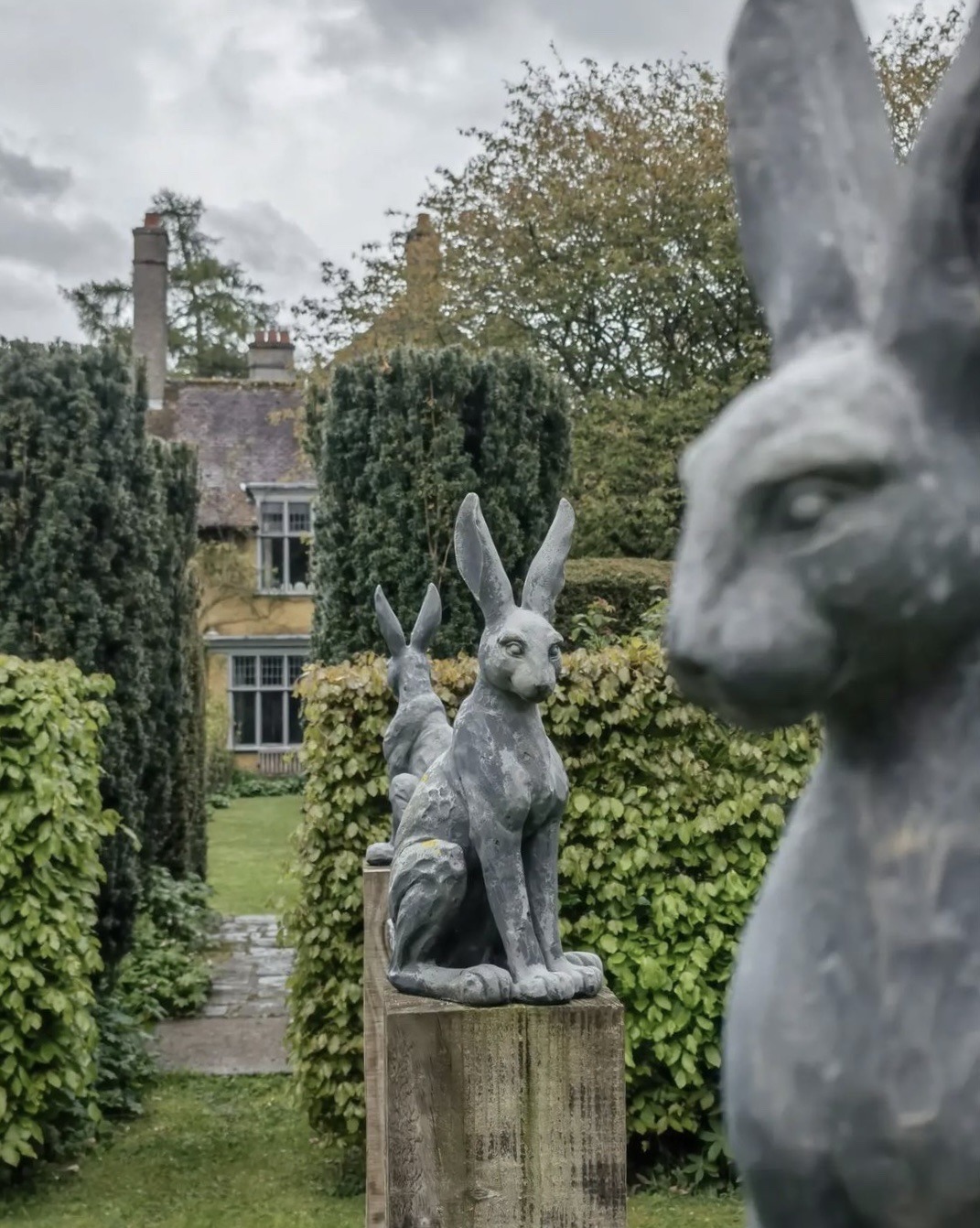
We had now come in full view of the old family mansion, partly thrown in deep shadow, and partly lit up by the cold moonshine. It was an irregular building of some magnitude, and seemed to be of the architecture of different periods. One wing was evidently very ancient, with heavy stone-shafted bow windows jutting out and overrun with ivy, from among the foliage of which the small diamond-shaped panes of glass glittered with the moonbeams. The rest of the house was in the French taste of Charles the Second's time, having been repaired and altered, as my friend told me, by one of his ancestors, who returned with that monarch at the Restoration. The grounds about the house were laid out in the old formal manner of artificial flower-beds, clipped shrubberies, raised terraces, and heavy stone balustrades, ornamented with urns, a leaden statue or two, and a jet of water. The old gentleman, I was told, was extremely careful to preserve this obsolete finery in all its original state. He admired this fashion in gardening; it had an air of magnificence, was courtly and noble, and befitting good old family style. The boasted imitation of nature in modern gardening had sprung up with modern republican notions, but did not suit a monarchical government; it smacked of the levelling system.—I could not help smiling at this introduction of politics into gardening, though I expressed some apprehension that I should find the old gentleman rather intolerant in his creed.—Frank assured me, however, that it was almost the only instance in which he had ever heard his father meddle with politics; and he believed that he had got this notion from a member of parliament who once passed a few weeks with him. The Squire was glad of any argument to defend his clipped yew-trees and formal terraces, which had been occasionally attacked by modern landscape-gardeners.
As we approached the house, we heard the sound of music, and now and then a burst of laughter from one end of the building. This, Bracebridge said, must proceed from the servants' hall, where a great deal of revelry was permitted, and even encouraged, by the Squire throughout the twelve days of Christmas, provided everything was done conformably to ancient usage. Here were kept up the old games of hoodman blind, shoe the wild mare, hot cockles, steal the white loaf, bob apple, and snapdragon: the Yule log and Christmas candle were regularly burnt, and the mistletoe, with its white berries, hung up, to the imminent peril of all the pretty housemaids.

Washington Irving, from "Old Christmas"

07 December 2024

Impending.

Aldin, The Stage-Coachman, 1908


Perhaps it might be owing to the pleasing serenity that reigned in my own mind that I fancied I saw cheerfulness in every countenance throughout the journey. A stage-coach, however, carries animation always with it, and puts the world in motion as it whirls along. The horn, sounded at the entrance of the village, produces a general bustle. Some hasten forth to meet friends; some with bundles and bandboxes to secure places, and in the hurry of the moment can hardly take leave of the group that accompanies them. In the meantime the coachman has a world of small commissions to execute. Sometimes he delivers a hare or pheasant; sometimes jerks a small parcel or newspaper to the door of a public house; and sometimes, with knowing leer and words of sly import, hands to some half-blushing, half-laughing house-maid an odd-shaped billet-doux from some rustic admirer. As the coach rattles through the village every one runs to the window, and you have glances on every side of fresh country faces and blooming giggling girls. At the corners are assembled juntos of village idlers and wise men, who take their stations there for the important purpose of seeing company pass; but the sagest knot is generally at the blacksmith’s, to whom the passing of the coach is an event fruitful of much speculation. The smith, with the horse’s heel in his lap, pauses as the vehicle whirls by; the cyclops round the anvil suspend their ringing hammers and suffer the iron to grow cool; and the sooty spectre in brown paper cap laboring at the bellows leans on the handle for a moment, and permits the asthmatic engine to heave a long-drawn sigh, while he glares through the murky smoke and sulphurous gleams of the smithy.

Perhaps the impending holiday might have given a more than usual animation to the country, for it seemed to me as if everybody was in good looks and good spirits. Game, poultry, and other luxuries of the table were in brisk circulation in the villages; the grocers’, butchers’, and fruiterers’ shops were thronged with customers. The housewives were stirring briskly about, putting their dwellings in order, and the glossy branches of holly with their bright-red berries began to appear at the windows. The scene brought to mind an old writer’s account of Christmas preparation: “Now capons and hens, besides turkeys, geese, and ducks, with beef and mutton, must all die, for in twelve days a multitude of people will not be fed with a little. Now plums and spice, sugar and honey, square it among pies and broth. Now or never must music be in tune, for the youth must dance and sing to get them a heat, while the aged sit by the fire. The country maid leaves half her market, and must be sent again if she forgets a pack of cards on Christmas Eve. Great is the contention of holly and ivy whether master or dame wears the breeches. Dice and cards benefit the butler; and if the cook do not lack wit, he will sweetly lick his fingers.”

I was roused from this fit of luxurious meditation by a shout from my little travelling companions. They had been looking out of the coach-windows for the last few miles, recognizing every tree and cottage as they approached home, and now there was a general burst of joy. “There’s John! and there’s old Carlo! and there’s Bantam!” cried the happy little rogues, clapping their hands.

At the end of a lane there was an old sober-looking servant in livery waiting for them; he was accompanied by a superannuated pointer and by the redoubtable Bantam, a little old rat of a pony with a shaggy mane and long rusty tail, who stood dozing quietly by the roadside, little dreaming of the bustling times that awaited him.

I was pleased to see the fondness with which the little fellows leaped about the steady old footman and hugged the pointer, who wriggled his whole body for joy. But Bantam was the great object of interest; all wanted to mount at once, and it was with some difficulty that John arranged that they should ride by turns and the eldest should ride first.

Washington Irving, from "The Stagecoach"