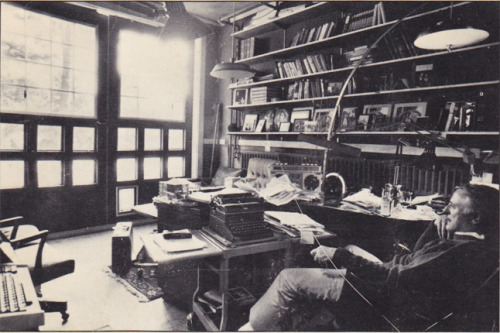
Wyck, A Scholar in His Study, 1677

Scholars experienced ... institutional transformations most immediately through the psychological effects of intellectual specialisation. To achieve something of value within the modern, disciplinary university, insisted Weber, a scholar must put ‘blinders on’ and devote himself to one question within a defined domain. He had to be satisfied with productive questions not definitive answers; industrious; committed to method; patient and reconciled to the fact that insights come to those who work; and, finally, resigned to the inevitable obsolescence of his own work.
A scholar’s work also required ‘a strange intoxication’, Weber said. The scholar wants to imbue his life with meaning; he wants to give it a form that connects him with other people and a world beyond himself. In this sense, the specialised scholar seeks wonder but shifts its object. Saint Augustine advised early Christian readers to begin their study of scripture humbly and full of wonder, an acknowledgment that the scripture points to a well-ordered and meaningful universe. The modern philologist, in contrast, begins with critique and ends in wonder. For the latter, the object of wonder is not a divinely ordered cosmos, but rather the meaning produced through his own scholarly work, the fruit of method and technique. The modern scholar is struck by his own capacity to explain and reveal what seems discrete and particular.
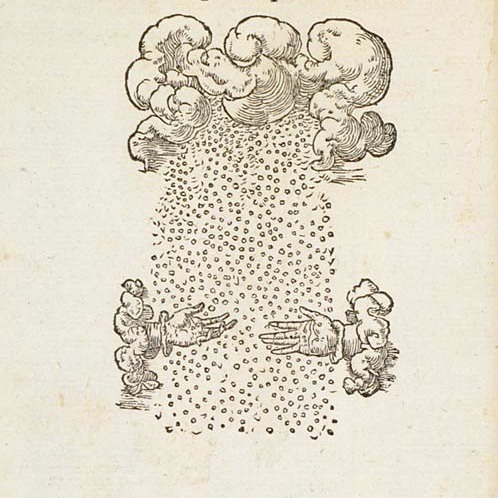
It was here that Weber introduced the idea of ‘disenchantment’ – or, more in keeping with the German Entzauberung – ‘de-magicking’. Some prominent readers have mistaken Weber’s ‘disenchantment’ for a grand process of secularisation, the widespread loss of religious belief. Yet in ‘The Scholar’s Work’, Weber uses the term to refer to an incomplete process in which people experience meaning as something not given or existing readymade in the world. In an enchanted world, the bearers of meaning exist outside of our own minds. For those who live in a disenchanted world, however, meaning is something to be achieved. Weberian disenchantment of the world, properly understood, is a burden but also an opportunity for true freedom.
CONNECT
Scholars experienced ... institutional transformations most immediately through the psychological effects of intellectual specialisation. To achieve something of value within the modern, disciplinary university, insisted Weber, a scholar must put ‘blinders on’ and devote himself to one question within a defined domain. He had to be satisfied with productive questions not definitive answers; industrious; committed to method; patient and reconciled to the fact that insights come to those who work; and, finally, resigned to the inevitable obsolescence of his own work.
A scholar’s work also required ‘a strange intoxication’, Weber said. The scholar wants to imbue his life with meaning; he wants to give it a form that connects him with other people and a world beyond himself. In this sense, the specialised scholar seeks wonder but shifts its object. Saint Augustine advised early Christian readers to begin their study of scripture humbly and full of wonder, an acknowledgment that the scripture points to a well-ordered and meaningful universe. The modern philologist, in contrast, begins with critique and ends in wonder. For the latter, the object of wonder is not a divinely ordered cosmos, but rather the meaning produced through his own scholarly work, the fruit of method and technique. The modern scholar is struck by his own capacity to explain and reveal what seems discrete and particular.
It was here that Weber introduced the idea of ‘disenchantment’ – or, more in keeping with the German Entzauberung – ‘de-magicking’. Some prominent readers have mistaken Weber’s ‘disenchantment’ for a grand process of secularisation, the widespread loss of religious belief. Yet in ‘The Scholar’s Work’, Weber uses the term to refer to an incomplete process in which people experience meaning as something not given or existing readymade in the world. In an enchanted world, the bearers of meaning exist outside of our own minds. For those who live in a disenchanted world, however, meaning is something to be achieved. Weberian disenchantment of the world, properly understood, is a burden but also an opportunity for true freedom.
CONNECT






























































































































No comments:
Post a Comment