"I am not one who was born in the custody of wisdom. I am one who is fond of olden times and intense in quest of the sacred knowing of the ancients." Gustave Courbet
Showing posts with label sarah. Show all posts

20 November 2026

Attention.


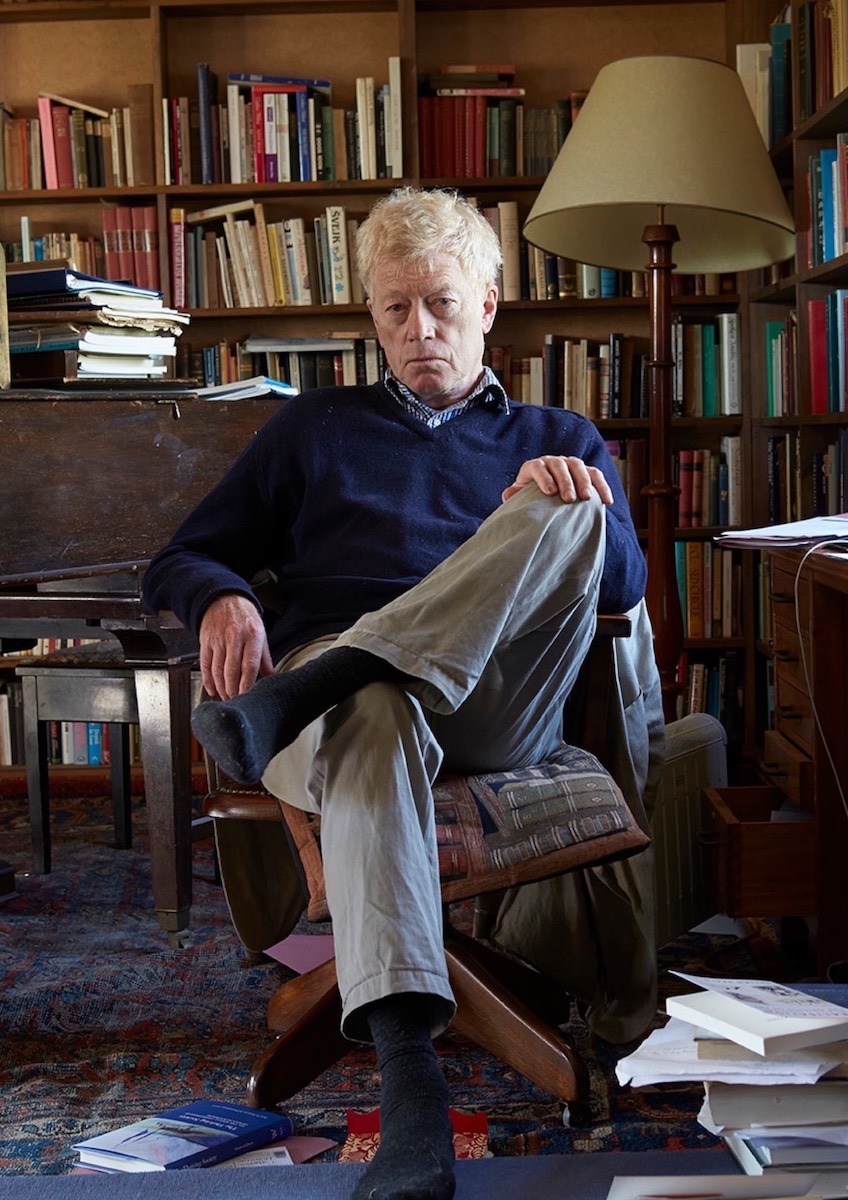
Sir Roger on music and the transcendental, a timely message ...
We all have this conception within us that certain moments, certain events, certain ceremonies, and certain social occasions stand outside the ordinary run of events. They are not simply day-to-day events, but somehow they are places, times, or occasions, which take us outside ourselves and point us to another world—a world which, whether or not we even think it exists, is nevertheless there in our imaginations and beckoning to us. And this of course is something that we experience in collective worship—those of us who are believers or are attached to a particular faith. And we recognize it as contained within liturgical words and the habit of chanting. I think it is worth thinking about this experience, even if it may not be an experience we repeat each week in church, or mosque, or synagogue, or wherever. Nevertheless, for all of us there is deep in the unconscious memory this sense of the ceremonial presence of the divine and our collective attention to it. In this moment, our attention is turned towards the altar, and the altar is a kind of "no place." It is a place within our world which is also nowhere because there is nothing at it. The thing that is there is in some deep sense elsewhere. It lies outside our world. It is not of this world.

More of this kind of thinking, HERE. 

15 November 2026

Attuned.

Cardinal Robert Sarah on why sacred music matters ...
It calls us to the conversion of our lives.  It purifies us and heals us and give us the grace to persevere in our vocation as Christian.  And above all, the liturgy prepare us for that inhaling life promised us in heaven. This is why our full conscious and active participation in the liturgy is essential.  I didn't mean that we must be hyperactive in sense of doing many things externally rather I mean that our minds and hearts and soul and yes our bodies also must be as attuned as possible to the meaning of the sacred rights and chants and prayer that comprise the church's liturgy.  For that is how we plug into or connect with the saving action of our Lord Jesus Christ in the liturgy writes. 

This, my friend, is why the liturgy is sacred.  It is something that it is essential essentially holy.  It is first and foremost of God. It is not something that you or I can make or change.  Even if we think that we are experts or even we are bishops. No, we must be humbled before the sacred liturgy as it has been handed over to us in the church tradition. We are to be its faithful stewards and guardians and not to behave like his proprietary and exploit it or change it for our own purpose.

First, burn all the bongos and tambourines.

11 November 2026

Wonder.


Our world no longer hears God because it is constantly speaking, at a devastating speed and volume, in order to say nothing. Modern civilization does not know how to be quiet. It holds forth in an unending monologue. Postmodern society rejects the past and looks at the present as a cheap consumer object; it pictures the future in terms of an almost obsessive progress. Its dream, which has become a sad reality, will have been to lock silence away in a damp, dark dungeon. Thus there is a dictatorship of speech, a dictatorship of verbal emphasis. In this theater of shadows, nothing is left but a purulent wound of mechanical words, without perspective, without truth, and without foundation. 

Quite often “truth” is nothing more than the pure and misleading creation of the media, corroborated by fabricated images and testimonies. When that happens, the word of God fades away, inaccessible and inaudible. Postmodernity is an ongoing offense and aggression against the divine silence. From morning to evening, from evening to morning, silence no longer has any place at all; the noise tries to prevent God himself from speaking. 

In this hell of noise, man disintegrates and is lost; he is broken up into countless worries, fantasies, and fears. In order to get out of these depressing tunnels, he desperately awaits noise so that it will bring him a few consolations. Noise is a deceptive, addictive, and false tranquilizer. The tragedy of our world is never better summed up than in the fury of senseless noise that stubbornly hates silence. This age detests the things that silence brings us to: encounter, wonder, and kneeling before God. 

Even in the schools, silence has disappeared. And yet how can anyone study in the midst of noise? How can you read in noise? How can you train your intellect in noise? How can you structure your thought and the contours of your interior being in noise? How can you be open to the mystery of God, to spiritual values, and to our human greatness in continual turmoil? Contemplative silence is a fragile little flame in the middle of a raging ocean. The fire of silence is weak because it is bothersome to a busy world.

Words often bring with them the illusion of transparency, as though they allowed us to understand everything, control everything, put everything in order. Modernity is talkative because it is proud, unless the converse is true. Is our incessant talking perhaps what makes us proud?

10 November 2026

Defines.


Speech characterizes man.  Silence is what defines him.

Robert Cardinal Sarah, from The Power of Silence: Against the Dictatorship of Noise

No, Cardinal Sarah does not have a blog.

30 August 2026

Excellent.

An excellent book ...


Our world no longer hears God because it is constantly speaking, at a devastating speed and volume, in order to say nothing. Modern civilization does not know how to be quiet. It holds forth in an unending monologue. Postmodern society rejects the past and looks at the present as a cheap consumer object; it pictures the future in terms of an almost obsessive progress. Its dream, which has become a sad reality, will have been to lock silence away in a damp, dark dungeon. Thus there is a dictatorship of speech, a dictatorship of verbal emphasis. In this theater of shadows, nothing is left but a purulent wound of mechanical words, without perspective, without truth, and without foundation. 

Quite often “truth” is nothing more than the pure and misleading creation of the media, corroborated by fabricated images and testimonies. When that happens, the word of God fades away, inaccessible and inaudible. 

Postmodernity is an ongoing offense and aggression against the divine silence. From morning to evening, from evening to morning, silence no longer has any place at all; the noise tries to prevent God himself from speaking. In this hell of noise, man disintegrates and is lost; he is broken up into countless worries, fantasies, and fears. In order to get out of these depressing tunnels, he desperately awaits noise so that it will bring him a few consolations. Noise is a deceptive, addictive, and false tranquilizer. 

The tragedy of our world is never better summed up than in the fury of senseless noise that stubbornly hates silence. This age detests the things that silence brings us to: encounter, wonder, and kneeling before God. Even in the schools, silence has disappeared. And yet how can anyone study in the midst of noise? How can you read in noise? How can you train your intellect in noise? How can you structure your thought and the contours of your interior being in noise? How can you be open to the mystery of God, to spiritual values, and to our human greatness in continual turmoil? Contemplative silence is a fragile little flame in the middle of a raging ocean. The fire of silence is weak because it is bothersome to a busy world ...

Words often bring with them the illusion of transparency, as though they allowed us to understand everything, control everything, put everything in order. Modernity is talkative because it is proud, unless the converse is true. Is our incessant talking perhaps what makes us proud?

Cardinal Robert Sarah, from The Power of Silence: Against the Dictatorship of Noise































































