"I am not one who was born in the custody of wisdom. I am one who is fond of olden times and intense in quest of the sacred knowing of the ancients." Gustave Courbet
Showing posts with label Sobran. Show all posts

24 November 2024

Appreciate.

 Brownscombe, Thanksgiving at Plymouth, 1925


'Tis time to give thanks, go back and reread Joseph Sobran's essay, "Pensees: Notes for the Reactionary of Tomorrow," first published in National Review on December 31, 1985 ...
Man doesn't really create anything. We don't sit godlike above the world, omniscient and omnipotent. We find ourselves created, placed somehow in the midst of things that we here before us, related to them in particular ways. if we can't delight in our situation, we are off on the wrong foot.

More and more I find myself thinking that a conservative is someone who regards this world with a basic affection, and wants to appreciate it as it is before he goes on to the always necessary work of making some rearrangements. Richard Weaver says we have no right to reform the world unless we cherish some aspects of it; and that is the attitude of many of the best conservative thinkers. Burke says that a constitution ought to be the subject of enjoyment rather than altercation. (I wish the American Civil Liberties Union would take his words to heart.)

I find a certain music in conservative writing that I never find in that of liberals. Michael Oakeshott speaks of "affection," "attachment," "familiarity," "happiness"; and my point is not the iname one that these are very nice things, but that Oakeshott thinks of them as considerations pertinent to political thinking. He knows what normal life is, what normal activities are, and his first thought is that politics should not disturb them.

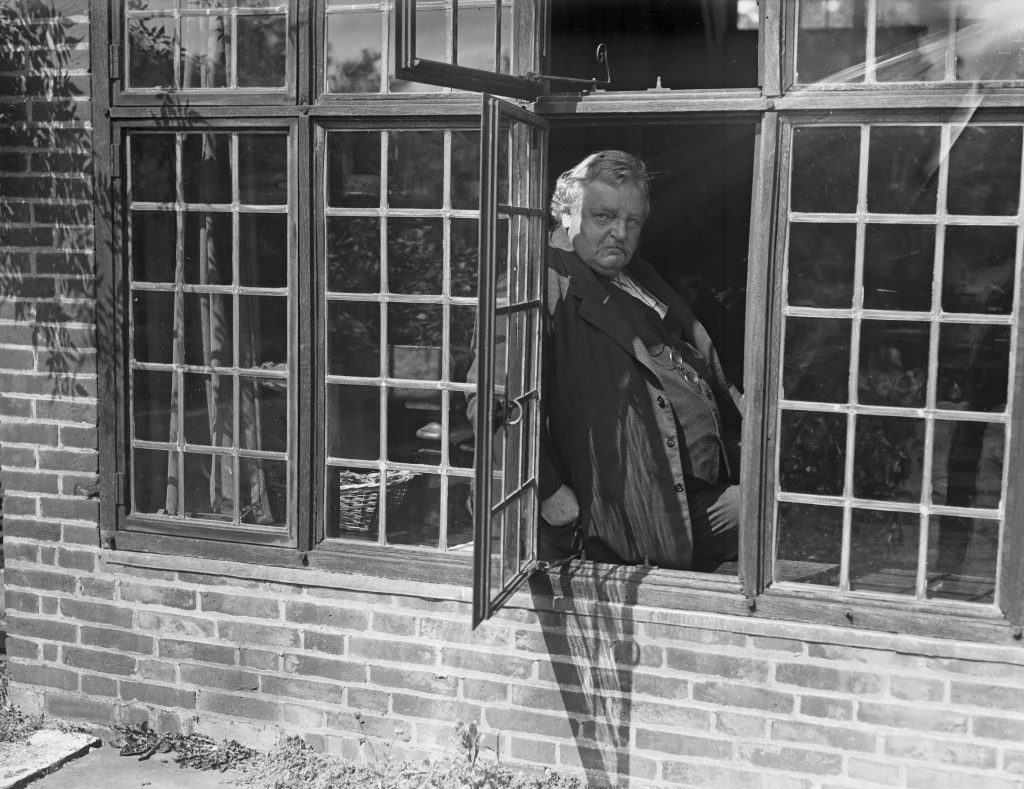
Chesterton (who hated the conservatism of his own day) has good remarks in this vein. "It is futile to discuss reform," he says, "without reference to form." He complains of "the modern and morbid habit of always sacrificing the normal to the abnormal," and he criticizes socialism on the ground that "it is rather shocking that we have to treat a normal nation as something exceptional, like a house on fire or a shipwreck."

"He who is unaware of his ignorance," writes Richard Whately, "will only be misled by his knowledge." And that is the trouble with the liberal, the socialist, the Communist, and a dozen other species of political cranks who have achieved respectability in our time: they disregard so much of what is constant and latent in life. They fail to notice; they fail to appreciate.

I'm very grateful to my friend, Kurt, for introducing me to conservatism, Buckley and National Review, Tyrrell and The American Spectator, Buchanan, and Sobran many years ago.

14 August 2020

Appreciate.


Chesterton (who hated the conservatism of his own day) has good remarks in this vein. "It is futile to discuss reform," he says, "without reference to form." He complains of "the modern and morbid habit of always sacrificing the normal to the abnormal," and he criticizes socialism on the ground that "it is rather shocking that we have to treat a normal nation as something exceptional, like a house on fire or a shipwreck."

"He who is unaware of his ignorance," writes Richard Whately, "will only be misled by his knowledge." And that is the trouble with the liberal, the socialist, the Communist, and a dozen other species of political cranks who have achieved respectability in our time: they disregard so much of what is constant and latent in life. They fail to notice; they fail to appreciate.

We can paraphrase Chesterton's remark about reforming without reference to form by saying it is futile to criticize without first appreciating. The conservative is bewildered by the comprehensive dissatisfaction of people who are always heedlong about "reform" (as they conceive it) or are even eager to "build a new society." What, exactly, is wrong with society as it is already? This isn't just a defiant rhetorical question; it needs an answer. We don't have the power to change everything, and it may not be such a bright idea to try; there are plenty of things that deserve the effort (and it is an effort) of preserving, and the undistinguishing mania for "change" doesn't do them justice--isn't even concerned with doing them justice. What we really ought to ask the liberal, before we even begin addressing his agenda, is this: In what kind of society would he be a conservative?

For some reason, we have allowed the malcontent to assume moral prestige. We praise as "ideals" what are nothing more than fantasies--a world of perpetual peace, brotherhood, justice, or any other will-o'-the-wisp that has lured men toward the Gulag.

The malcontent can be spotted in his little habits of speech: He calls language and nationality "barriers" when the conservative, more appreciatively, recognizes them as cohesives that make social life possible. He damns as "apathy" an ordinary indifference to politics that may really be a healthy contentment. He praises as "compassion" what the conservative earthily sees as a program of collectivization. He may even assert as "rights" what tradition has regarded as wrongs.

"We must build out of existing materials," says Burke. Oakeshott laments that "the politics of repair" has been supplanted by "the politics of destruction and creation." It is typical of malcontent (or "utopian") politics to destroy what it has failed to appreciate while falsely promising to create. Communism, the ideal type of this style of politics, has destroyed the cultural life of Russia, which flourished even under the czars. The energies of radical regimes are pretty much consumed in stifling the energies of their subjects; they try to impose their fantasies by force and terror, and their real achievement is to be found not in their population centers but at their borders, which are armed to kill anyone who tries to flee. Communism can claim the distinction of driving people by the millions to want to escape the homeland of all their ancestors.

Nothing is easier than to image some notionally "ideal" state. But we give too much credit to this debased kind of imagination, which is so ruthless when it takes itself seriously. To appreciate, on the other hand, is to imagine the real, to discover use, value, beauty, order, purpose in what already exists; and this is the kind of imagination most appropriate to creatures, who shouldn't confuse themselves with the Creator.

Joseph Sobran, from "Pensees: Notes for the Reactionary of Tomorrow," published in National Review on December 31, 1985