
Ladies and gentlemen, lovers of the word, custodians of the canon, and seekers of the sublime in language, I stand before you today not as a moralist, but as a defender of the poetic, the resonant, the eternal in our tongue. I come to speak of a word—a small, coarse syllable—that has, through overuse and cultural indolence, become a blight upon our expressive capacities. That word is "f#$%." I propose, with all the weight of my devotion to Shakespeare, Milton, and Whitman, that we consign this word to the dustbin of linguistic history, not for reasons of prudery, but for its utter failure to rise to the grandeur of human imagination.
Let us begin with the aesthetic. The English language, that magnificent edifice built by the hands of Chaucer, Shakespeare, and Joyce, is a cathedral of thought and feeling. Its lexicon is a tapestry woven with threads of Anglo-Saxon vigor, Latinate precision, and the lyricism of countless poets who have sung the soul’s complexities. Yet, in our age, we have allowed this four-letter word to become a crutch, a blunt instrument where once we wielded the rapier of wit. To say “f#$%” in every moment of passion, rage, or surprise is to confess a paucity of invention. It is as if Hamlet, instead of crying, “O, what a rogue and peasant slave am I!” had merely muttered, “F#$% it.” The diminution is intolerable.
Consider the word’s history. Born in the shadows of our language, it carried once a certain primal force, a taboo that lent it power. But power, when overused, becomes banal. In our time, “f#$%” is no longer a transgressive cry; it is the wallpaper of our discourse, plastered across every surface until it fades into insignificance. When Whitman sang of the body electric, did he need such a word to electrify his verse? When Dickinson spoke of a soul’s slant truth, did she require vulgarity to pierce the veil? No. Their language soared because it was precise, inventive, and alive with the particularity of human experience. To rely on “f#$%” is to surrender to the generic, to forsake the individual for the commonplace.
Moreover, this word betrays a failure of what I have called the anxiety of influence. A great writer—or speaker—wrestles with the giants of the past, striving to say something new, to carve a unique space in the canon. But to pepper one’s speech with “f#$%” is to capitulate to the present, to accept the lazy vernacular of a culture that has forgotten how to wrestle. Why say “I’m f#$%ing furious” when you might, with Miltonic fire, declare, “My soul is wroth with indignation”? Why settle for “That’s f#$%ing beautiful” when you could, in the manner of Keats, proclaim, “That’s a vision of truth and beauty”? The language of the great poets offers us a thousand ways to name our joys and sorrows. To choose “f#$%” is to turn our backs on that inheritance.
And let us not ignore the social dimension. Language is not merely personal; it is communal, a bridge between minds. When we lean upon this overworked syllable, we diminish our capacity to move others. The word has lost its shock, its sting, its capacity to provoke. It is a dead metaphor, a husk of expression. If we are to communicate with depth, if we are to stir the hearts of our listeners, we must rediscover the art of surprise, the delight of the unexpected phrase. A well-placed “zounds!” or “perdition!”—nay, even a playful “gadzooks!”—carries more vigor in our jaded age than the tired expletive we so thoughtlessly deploy.
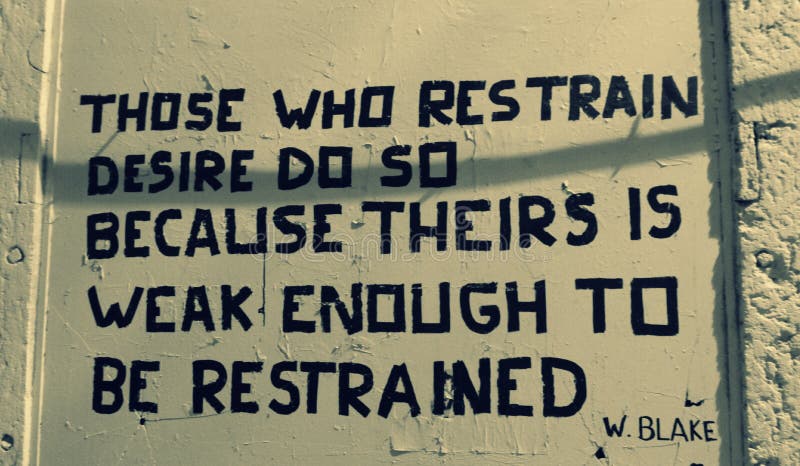
In closing, I urge you, my friends, to cast off this linguistic albatross. Let us return to the wellsprings of our language—Shakespeare’s boundless invention, Blake’s prophetic fire, Woolf’s luminous precision. Let us reject the easy vulgarity of “f#$%” and embrace the harder, nobler task of crafting speech that endures, that sings, that elevates. For in the end, it is not the coarseness of our words that defines us, but their capacity to reflect the sublime chaos of the human spirit.
Thank you, and may your tongues ever seek the poetry of the possible.
"Harold Bloom" (Thank you, Grok)














































































No comments:
Post a Comment