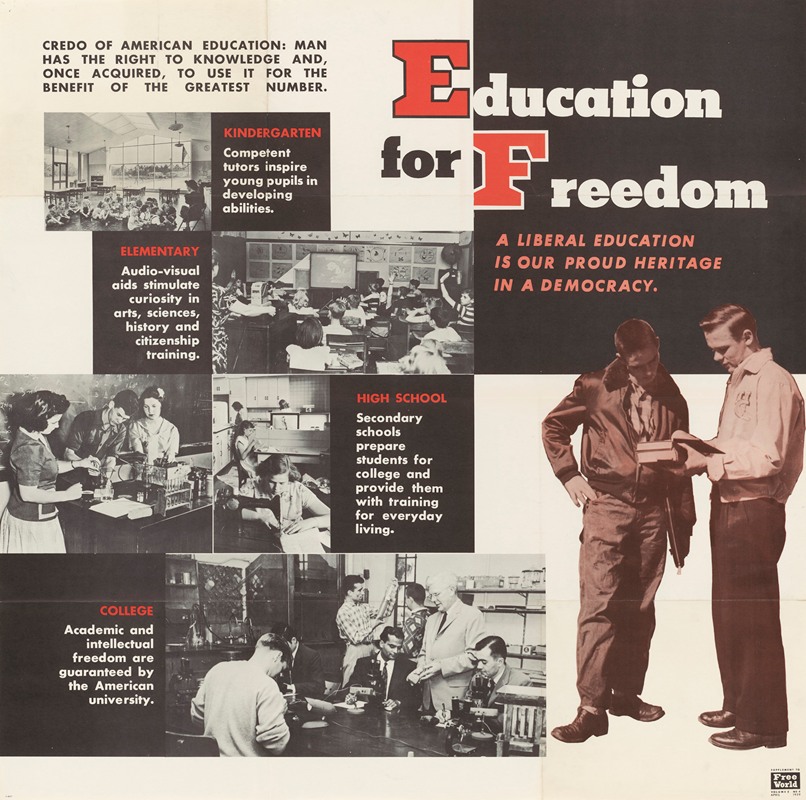
Eric Foner on the education of a historian ...
[F]reedom has been an American preoccupation ever since the Revolution gave birth to a nation that identified itself as a unique embodiment of freedom in a world overrun by oppression. The Declaration of Independence includes liberty among mankind’s unalienable rights; the Constitution announces at the outset the aim of securing the “blessings of liberty.” As the educator and statesman Ralph Bunche wrote in 1940, “every man in the street, white, red, black, or yellow, knows that this is ‘The land of the free…[and] the cradle of liberty.’”Yet freedom is neither a fixed idea nor a story of progress toward a predetermined goal. The history of American freedom is a tale of debates and struggles. Often, battles for control of the idea illustrate the contrast between the “negative” and “positive” meanings of freedom, a dichotomy elaborated by Isaiah Berlin in an influential essay in 1958. Negative liberty defines freedom as the absence of outside restraints on individual action. Positive liberty is a form of empowerment—the ability to establish and achieve one’s goals. While the first sees government as a threat to individual freedom, the second often requires governmental action to remove barriers to its enjoyment.













































































































No comments:
Post a Comment