Ciseri, Ecce Homo, 1871

Naturally, also, with the death of the old mythos, metaphysics too was transformed. For one thing, while every ancient system of philosophy had to presume an economy of necessity binding the world of becoming to its inmost or highest principles, Christian theology taught from the first that the world was God’s creature in the most radically ontological sense: that it is called from nothingness, not out of any need on God’s part, but by grace. The world adds nothing to the being of God, and so nothing need be sacrificed for His glory or sustenance. In a sense, God and world alike were liberated from the fetters of necessity; God could be accorded His true transcendence and the world its true character as divine gift. The full implications of this probably became visible to Christian philosophers only with the resolution of the fourth-century trinitarian controversies, when the subordinationist schemes of Alexandrian trinitarianism were abandoned, and with them the last residue within theology of late Platonism’s vision of a descending scale of divinity mediating between God and world—the both of them comprised in a single totality.
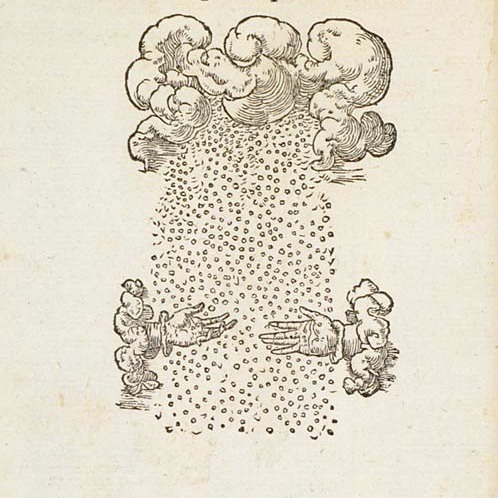
In any event, developed Christian theology rejected nothing good in the metaphysics, ethics, or method of ancient philosophy, but—with a kind of omnivorous glee—assimilated such elements as served its ends, and always improved them in the process. Stoic morality, Plato’s language of the Good, Aristotle’s metaphysics of act and potency—all became richer and more coherent when emancipated from the morbid myths of sacrificial economy and tragic necessity. In truth, Christian theology nowhere more wantonly celebrated its triumph over the old gods than in the use it made of the so-called spolia Aegyptorum; and, by despoiling pagan philosophy of its most splendid achievements and integrating them into a vision of reality more complete than philosophy could attain on its own, theology took to itself irrevocably all the intellectual glories of antiquity. The temples were stripped of their gold and precious ornaments, the sacred vessels were carried away into the precincts of the Church and turned to better uses, and nothing was left behind but a few grim, gaunt ruins to lure back the occasional disenchanted Christian and shelter a few atavistic ghosts.
This last observation returns me at last to my earlier contention: that Christianity assisted in bringing the nihilism of modernity to pass. The command to have no other god but Him whom Christ revealed was never for Christians simply an invitation to forsake an old cult for a new, but was an announcement that the shape of the world had changed, from the depths of hell to the heaven of heavens, and all nations were called to submit to Jesus as Lord. In the great “transvaluation” that followed, there was no sphere of social, religious, or intellectual life that the Church did not claim for itself; much was abolished, and much of the grandeur and beauty of antiquity was preserved in a radically altered form, and Christian civilization—with its new synthesis and new creativity—was born.
David Bentley Hart, from "Christ and Nothing"




















































































































No comments:
Post a Comment