One day there arrived a large parcel for the Emperor; on it was written, "Nightingale".
"Here now we have another book about our celebrated bird," said the Emperor; but it was not a book, it was a little machine, that lay in a box—an artificial Nightingale made to resemble the live one, but all set with diamonds, rubies and sapphires. As soon as ever the artificial bird was wound up, it could sing one of the strains the real one sang, and its tail moved up and down and glistened with silver and gold. Round its neck hung a little ribbon, and on it was written: "The Emperor of Japan's Nightingale is poor beside that of the Emperor of China."
"That is charming!" said everybody. And the man who had brought the artificial bird immediately received the title of Chief Imperial Bringer of Nightingales.
Now they must sing together; what a duet it will be!
So they had to sing together; but it wouldn't go right, for the real Nightingale sang it its own style, and the artificial bird went off into waltz-tunes.
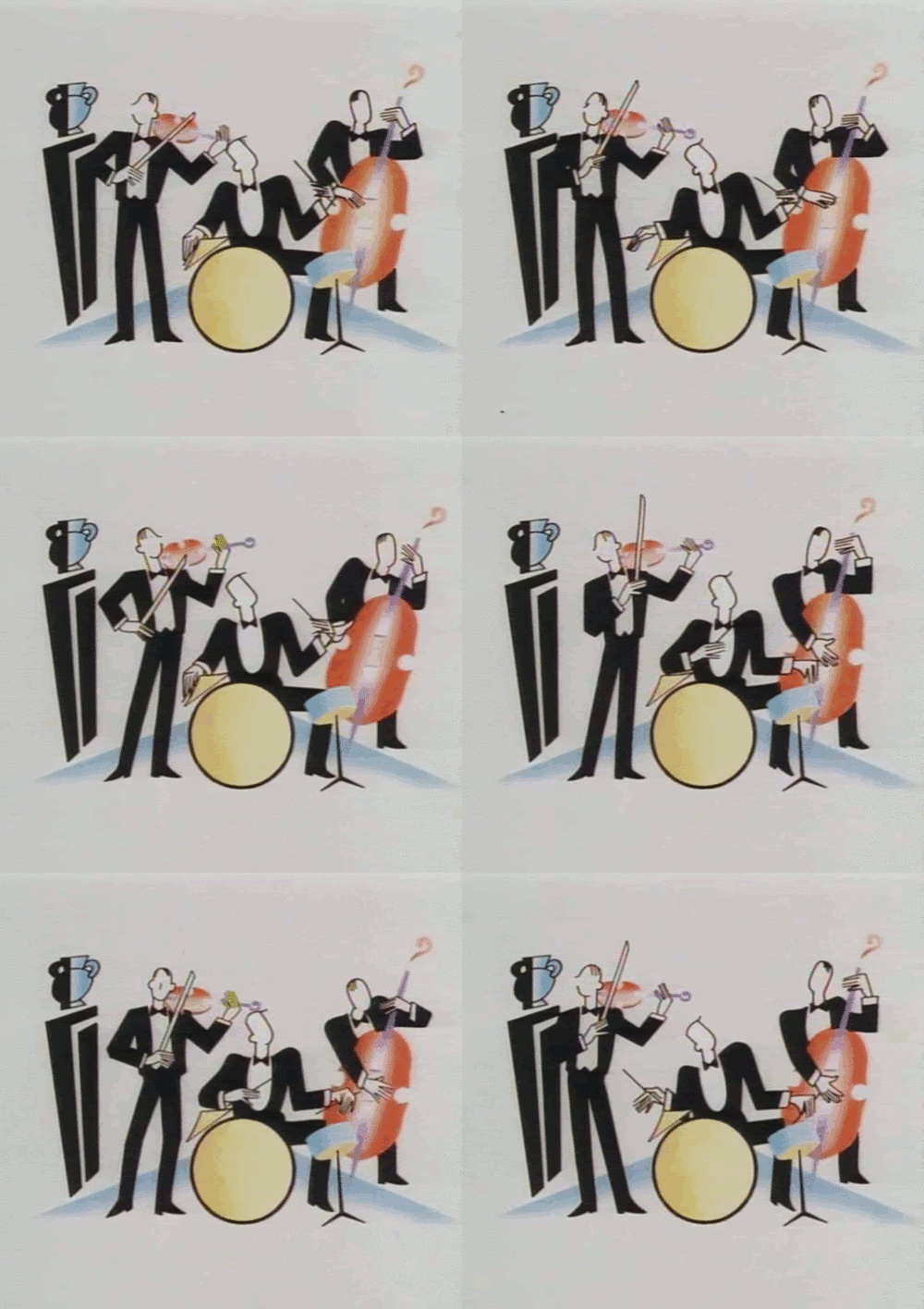
"No blame attaches to it," said the bandmaster; "it keeps excellent time, and is entirely of my school." So the artificial bird was to sing alone. It made as great a success as the real one, and was, besides, far prettier to look at; it glittered like a bracelet or a brooch.
Three-and-thirty times over did it sing the self-same melody, and yet it was not tired. The people would have liked to hear it over again, but the Emperor said that now the live Nightingale should sing a little—but where was it? Nobody had noticed that it had flown out of the open window, away to its own green wood.
"But what is the meaning of this?" said the Emperor. And all the court people scolded, and said the Nightingale was a most ungrateful creature. "Still, we have the best bird, after all," they said; and the artificial bird had to sing again. It was the thirty-fourth time they had heard the same piece, but they didn't quite know it yet, for it was very difficult, and the bandmaster praised the bird in the highest terms, and assured them that it was superior to the real Nightingale, not only as regards the plumage and the many beautiful diamonds, but also internally.
"For observe, your lordships, and the Emperor above all, with the real Nightingale one can never calculate what will come next, but with the artificial bird all is definite; it is thus, and no otherwise. It can be accounted for; one can open it up and show the human contrivance, how the waltzes are set, how they go, and how one follows on another."
"Exactly what I think," said everybody; and the bandmaster got permission on the following Sunday to exhibit the bird to the people. They too should hear it sing, said the Emperor. And they did hear it, and were as delighted as if they had got drunk on tea (which is the genuine Chinese fashion), and everyone said "oh" and pointed the finger we call lick-pot up in the air and then nodded. But the poor fisherman, who had heard the real Nightingale, said: "It sings pretty enough, and it's like it too; but there's something wanting, I don't know what!"
The real Nightingale was exiled from the land and realm. The artificial bird had a place assigned it on a silk cushion close to the Emperor's bed. All the presents that had been made to it, gold and jewels, lay round it, and it had risen to the title of "High Imperial Nightingale Songster" and in precedence was Number One on the Left Hand Side; for the Emperor accounted that side to be the most distinguished on which the heart lay, and even an Emperor's heart is on the left side. And the bandmaster wrote five-and-twenty volumes on the subject of the artificial bird. The work was very learned and very long, full of the most difficult words in the Chinese language, and everyone said they had read it and understood it; for otherwise they would have been accounted stupid and would have had their stomachs stamped upon.
Hans Christian Anderson, from "The Nightengale"
























































































No comments:
Post a Comment